CUSTOMER LOGIN

Routing polycarbonate, HDPE and solid surface: why material versatility starts with the machine
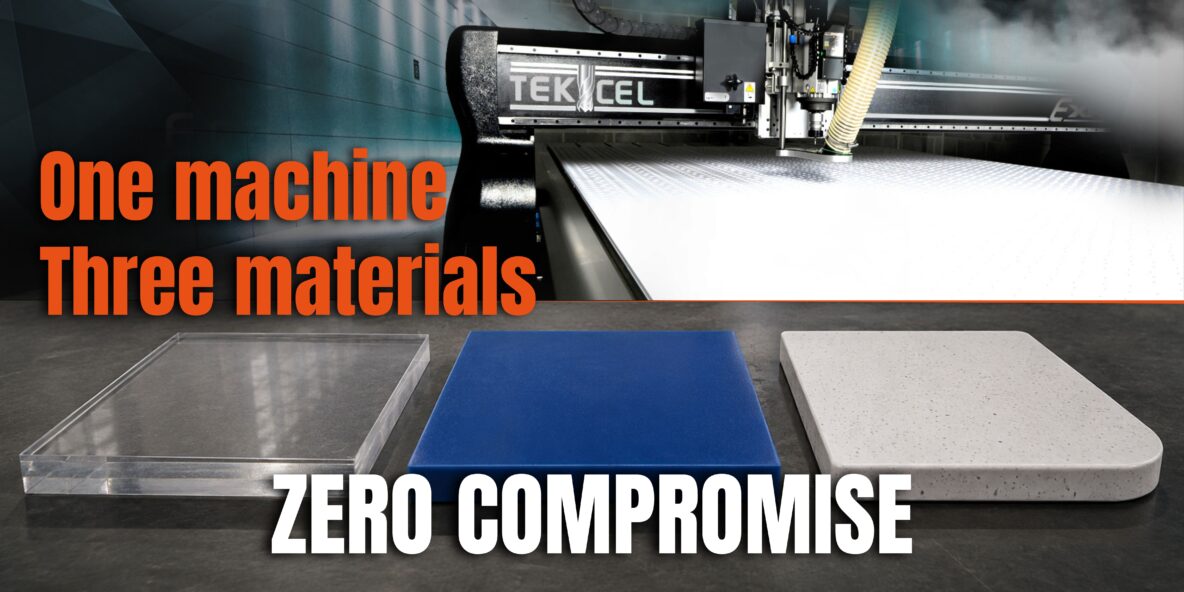
Routing polycarbonate, HDPE and solid surface: why material versatility starts with the machine
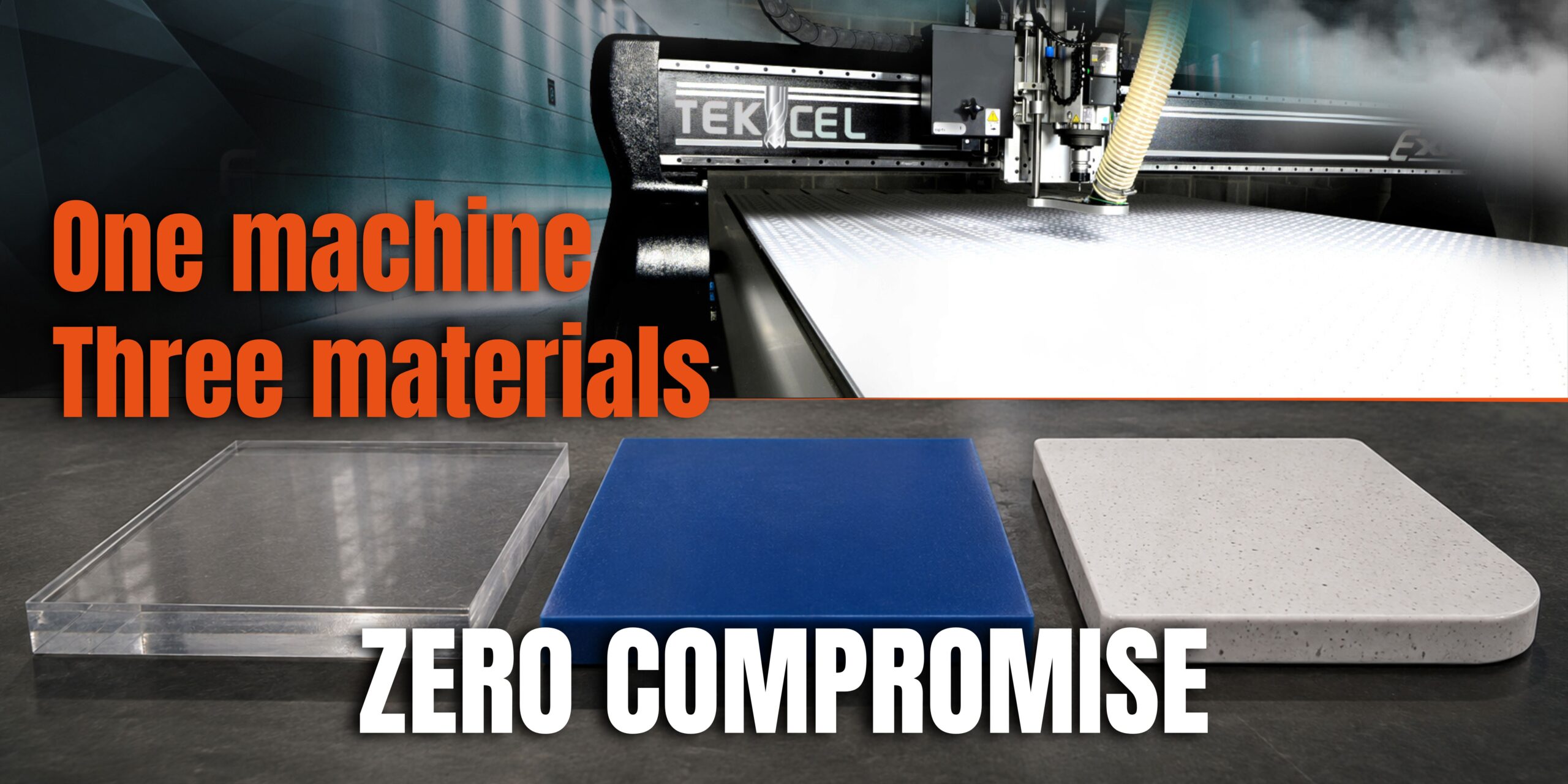
The range of materials a plastic fabrication business is asked to process has widened.
A shop that spent years cutting acrylic and foam PVC may now be fielding enquiries for polycarbonate machine guards, HDPE components, solid surface countertops or branded retail elements in Corian-style materials. That is not a minor change in the job list. It means the machine is being asked to move between materials that react very differently under the cutter.
Material versatility stops being a vague claim once the machine has to hold stable conditions from one very different material to the next.
What works cleanly on acrylic will not always translate well to polycarbonate. A cutting approach that suits HDPE can leave solid surface with a poor edge. The issue is not only tooling knowledge. It is whether the machine can hold stable conditions, accurate motion and consistent workholding while those material demands change.
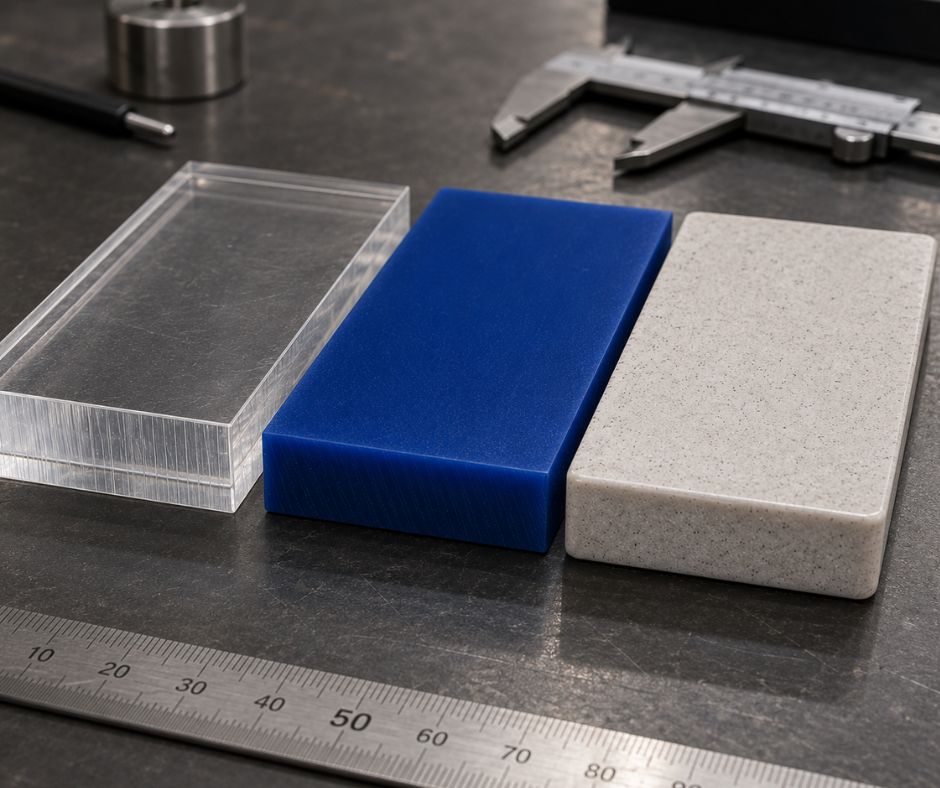
These materials do not fail in the same way
Polycarbonate is heat-sensitive in the cut. If chips are not clearing properly, the edge can soften, cloud or melt before the result is even fully off the bed. That is why shops often run it with O-flute or other single-flute style tooling, strong chip evacuation and feed rates that stop the cutter dwelling in the material too long. Typical spindle speed starting points can often sit around the mid-range rather than at the extremes, but the exact answer still depends on cutter diameter, pass depth, sheet thickness and edge finish requirements.
HDPE creates a different problem. It is softer, more flexible and more likely to create trouble through chip build-up, movement and re-welding around the cut if the setup is not right. Lower spindle speeds and more aggressive feed rates are often used as a starting strategy, but secure workholding is just as important. If the sheet moves or lifts, the cut quality will usually deteriorate long before the tool geometry itself becomes the first issue.
Solid surface behaves differently again. Corian, HI-MACS, Staron and similar materials are acrylic-based products with mineral filler, so they machine more like filled composites than standard thermoplastics. They are harder on tooling, and the edge quality becomes more visible because those parts often end up in countertops, retail fixtures or other finished surfaces where witness marks cannot simply be ignored.
This is where machine quality starts showing up
Across all three materials, the machine is being asked to maintain controlled cutting conditions rather than simply spin a tool.
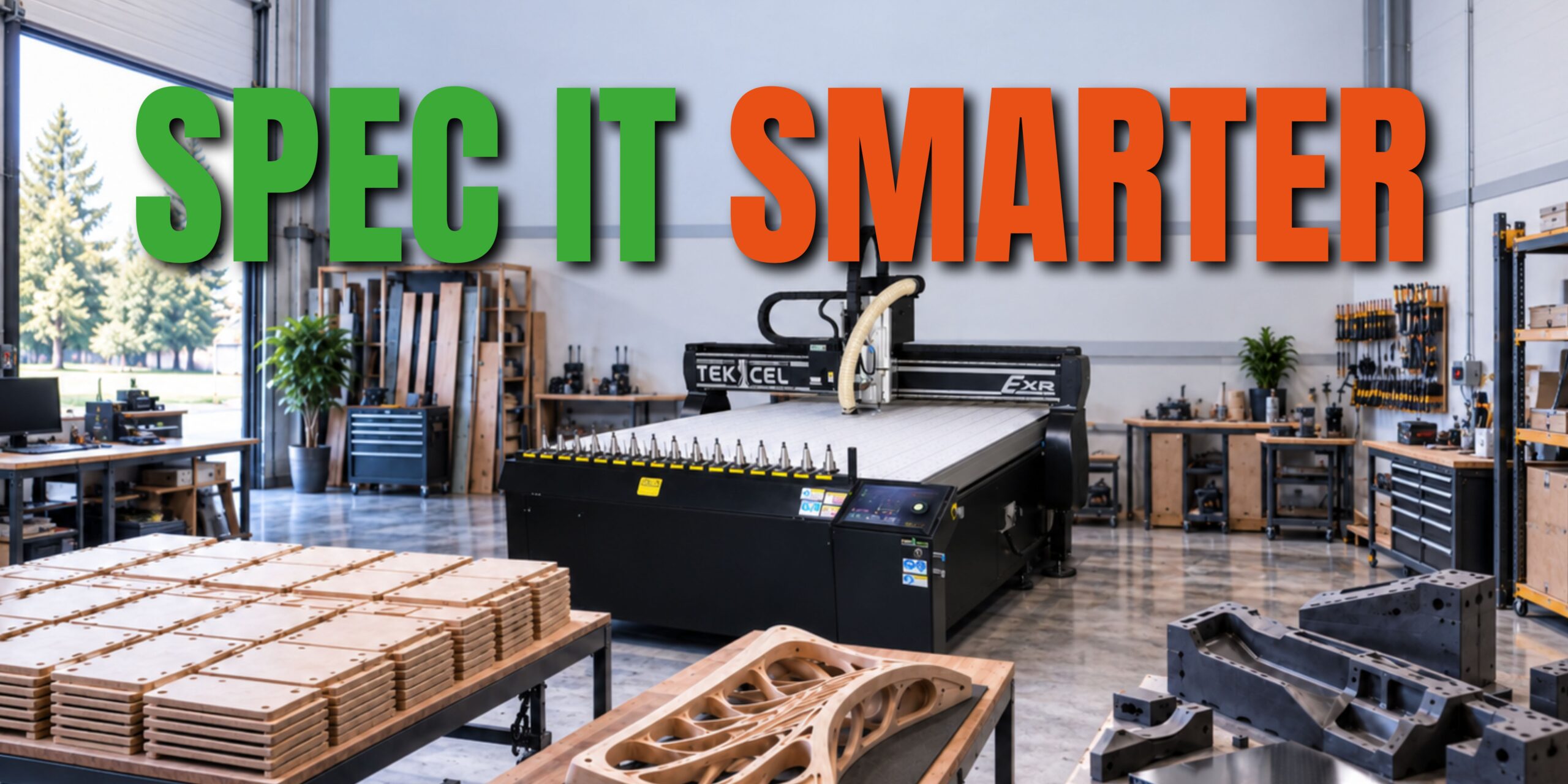
Spindle range, drive quality and workholding start becoming practical production issues here. The Tekcel EXR runs a 9kW HSD spindle across a 6,000 to 24,000 rpm range, which gives the operator more usable room to match the material rather than forcing every job into the same speed logic. Polycarbonate, HDPE and solid surface do not want the same balance of rpm, feed rate and chip load.
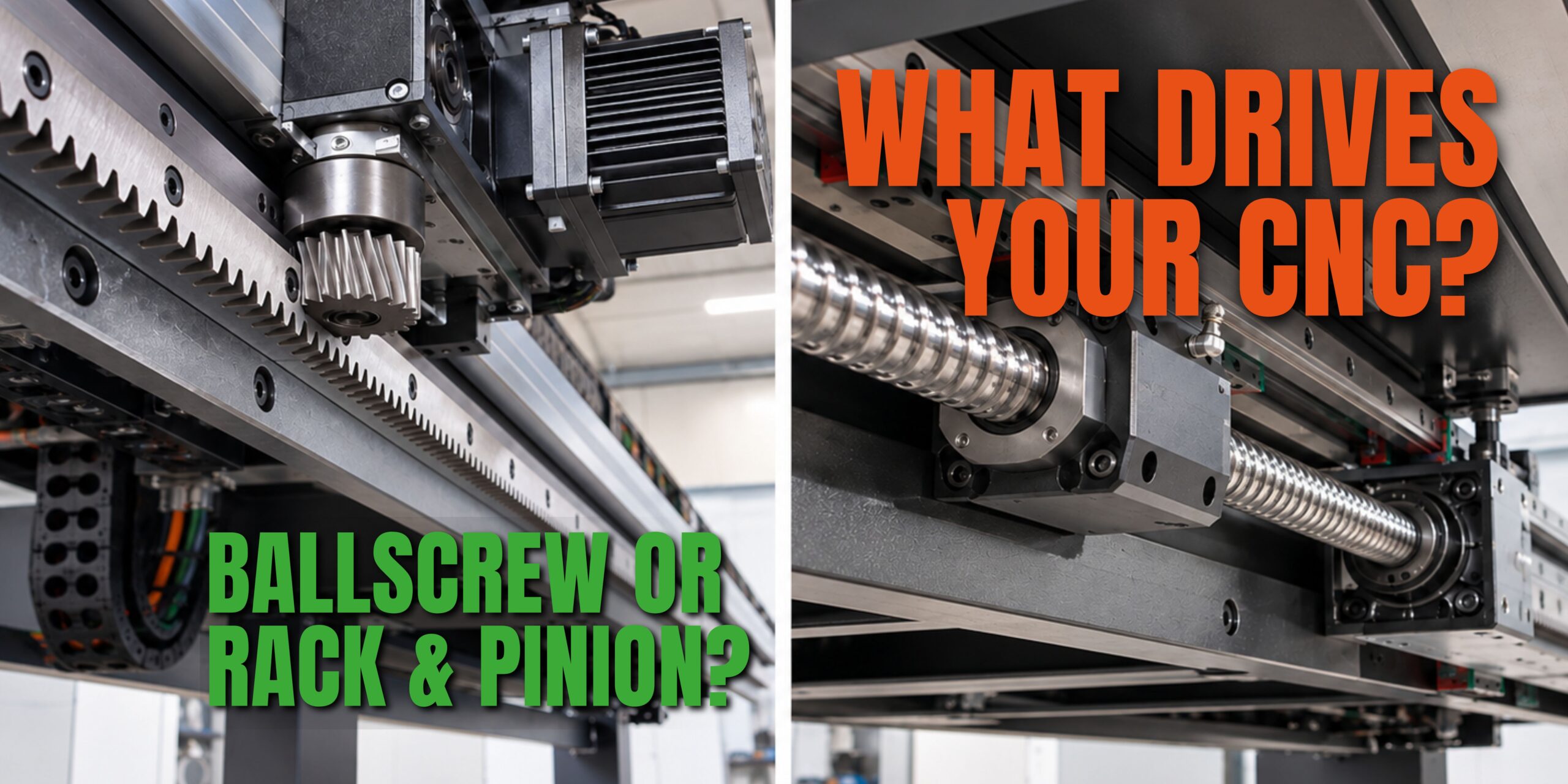
The drive system matters too. The EXR uses 30mm recirculating ball screws on all axes and 1kW digital servo motors with encoder feedback. In practice, that means more consistent positional control through changing loads, tighter geometry and more demanding edge paths. On flexible plastics and filled materials, that stability becomes visible in the cut much faster than many spec sheets suggest.
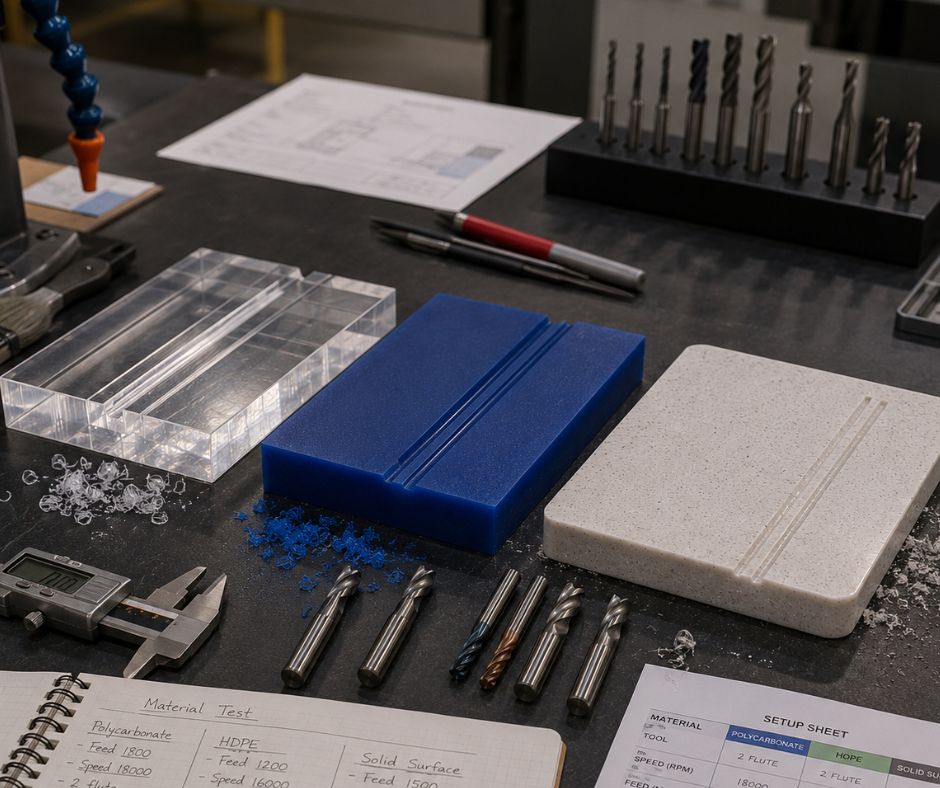
Workholding is part of material versatility as well
Material versatility is not only about spindle power.
HDPE sheet highlights that quickly because its flexibility makes poor hold-down obvious. Polycarbonate and solid surface expose it differently, but they still reward a machine that can hold material securely and predictably across the cutting area. The EXR’s high-performance vacuum hold-down is part of that story because stability at the bed affects what the tool can deliver at the edge.
Mist coolant can add another layer of control in selected applications as well. The EXR offers oil-only or oil-and-water mist options, which can be useful where heat build-up and edge condition need closer management without turning the whole process into a flood-cooled environment.
Versatility only counts if it is usable in production
The real commercial value is not simply being able to say yes to more materials. It is being able to process those materials reliably enough that they do not become stop-start jobs full of secondary finishing, repeated setup adjustment or uncertain yield. Polycarbonate, HDPE and solid surface all reward shops that can translate material knowledge into stable output, and that is exactly where weaker machines start to show their limits.
For plastic fabrication businesses, versatility opens up more defensible work. Machine guards, fabricated components, retail features, countertop elements and other higher-specification parts all depend on the machine behaving consistently when the material changes.
Tooling and parameters still matter, but they only deliver properly when spindle range, motion control and workholding are good enough to support them.
It also helps to have support around the tooling itself. If a material is unfamiliar or the cut quality is not where it needs to be, our team can test the material, recommend the most suitable tooling and advise on the speeds and feeds most likely to give a cleaner result. That shortens the gap between knowing the theory and running the job properly in production.
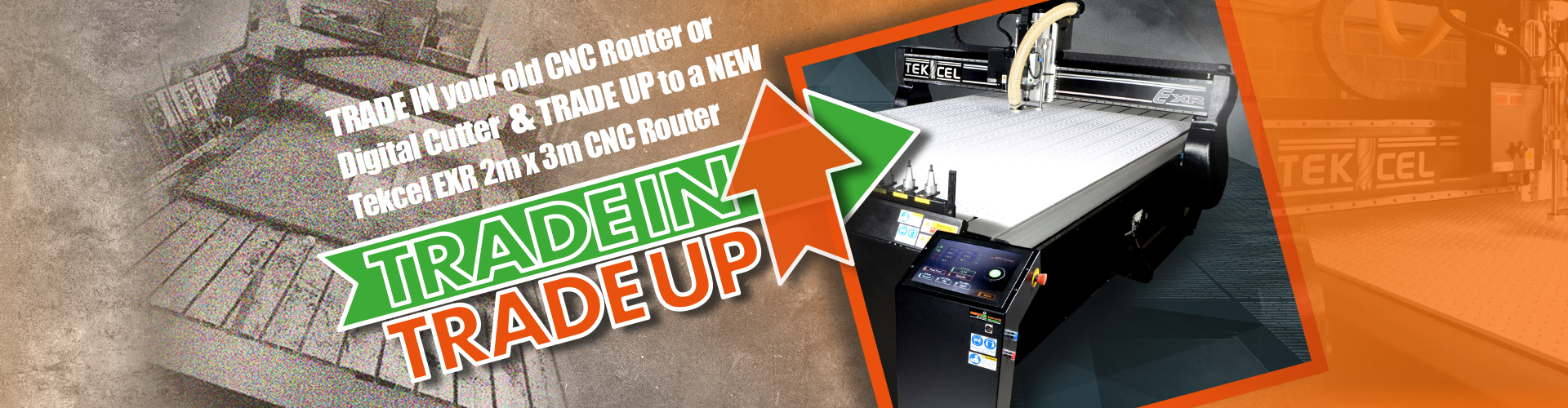
If the material list is widening but the current setup is making that harder to run consistently, the Tekcel EXR Trade-In Programme gives you an easier route into a more capable platform.
Further Blog Posts
Oct / 2026
The Hidden Cost of Rack & Pinion vs Ballscrew CNC Drives
Sep / 2026
Choosing your next CNC router: which work should drive the decision?
Aug / 2026
BS 559-2: Three practical questions for signmakers

Aug / 2026
Routing polycarbonate, HDPE and solid surface: why material versatility starts with the machine
Jul / 2026
How CNC cutting is reshaping retail interiors and displays

Jul / 2026
Why short-run structural packaging is becoming a CNC opportunity
Jun / 2026
The case for an ATC router in a metal fabrication shop
Jun / 2026
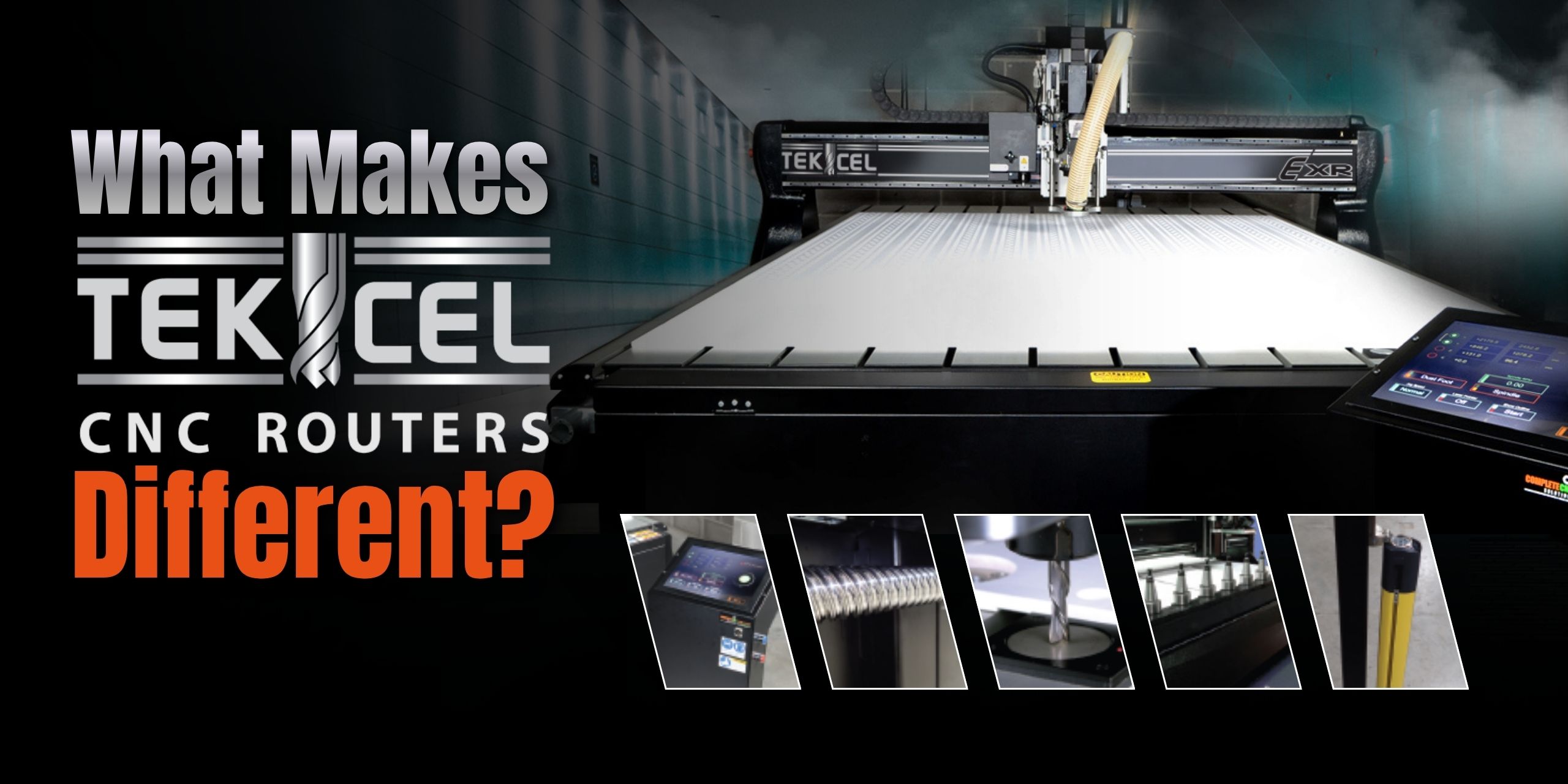
What makes the Tekcel EXR CNC Router different?