CUSTOMER LOGIN

The Hidden Cost of Rack & Pinion vs Ballscrew CNC Drives
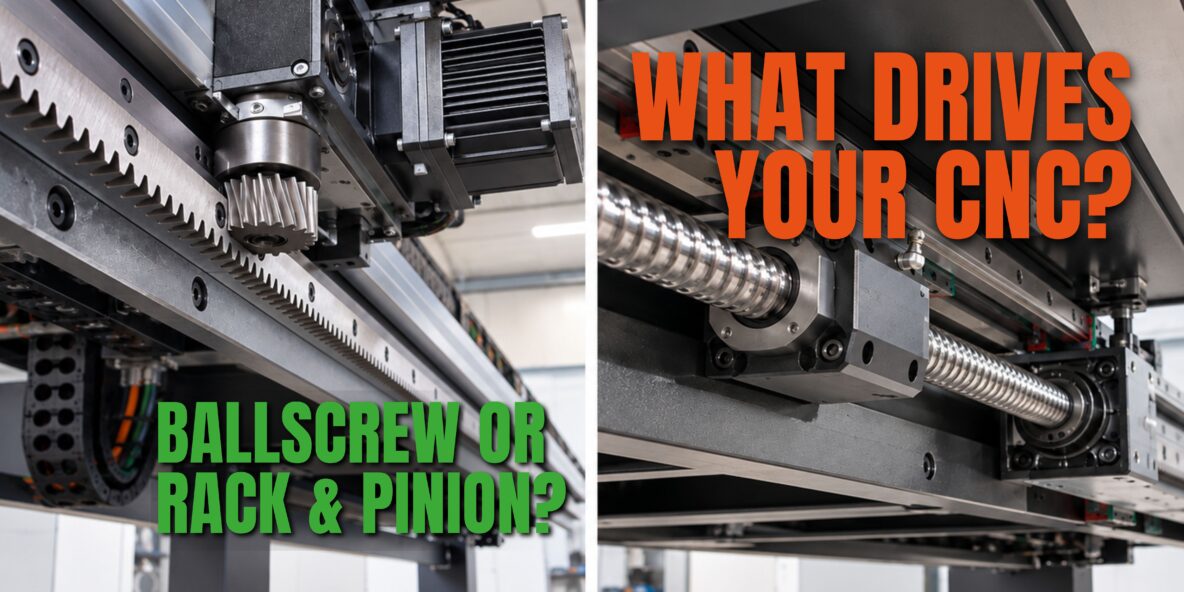
The Hidden Cost of Rack & Pinion vs Ballscrew CNC Drives
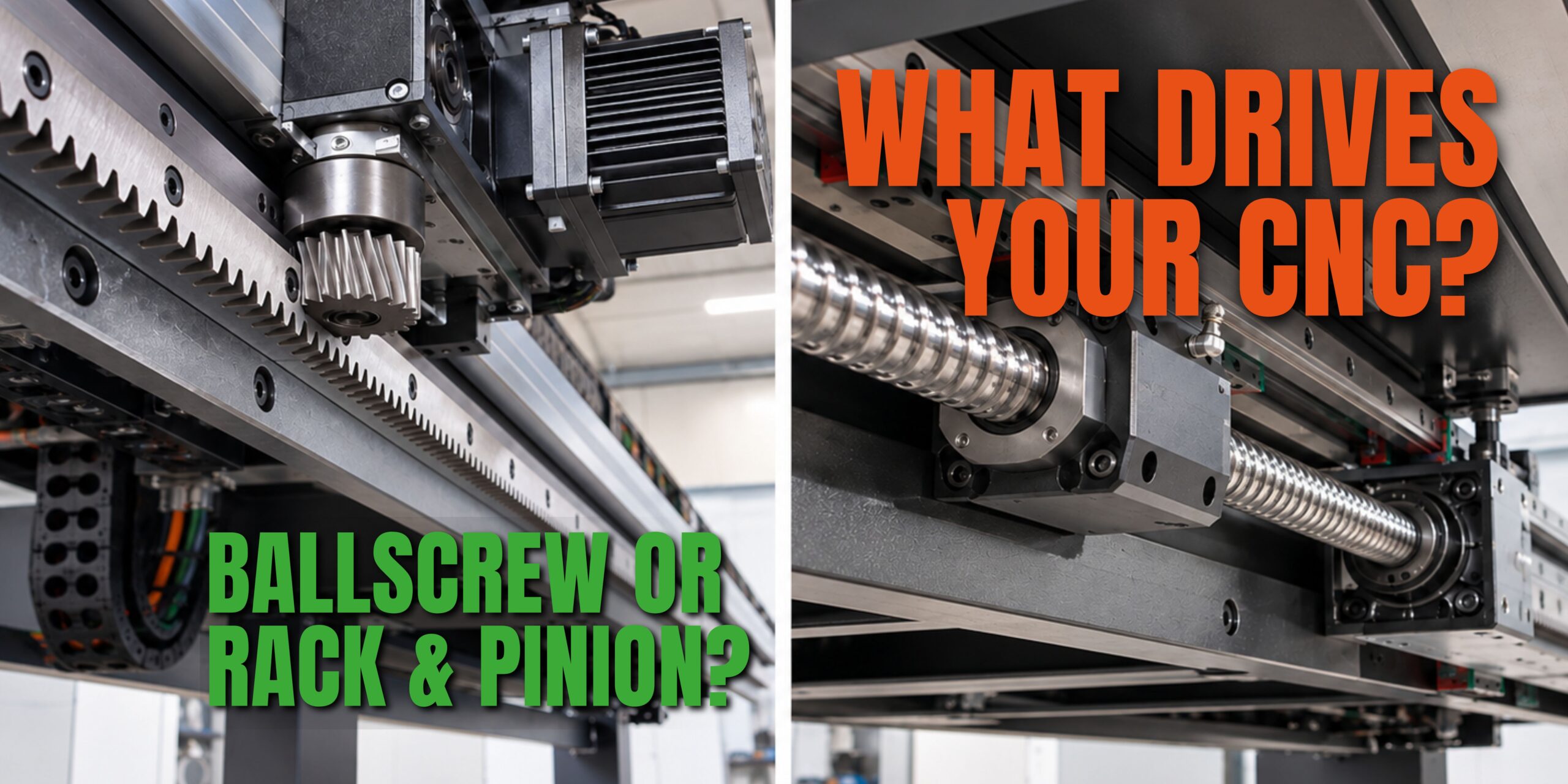
When investing in a new CNC router, it is easy to focus entirely on the bed size or spindle power. But if you want to understand how a machine will perform over years of production, it is worth knowing what's underneath it too.
The drive system plays a major role in positioning accuracy, repeatability and long-term machine performance. CNC routers commonly use either rack and pinion or ballscrew drive systems, particularly across the X and Y axes.
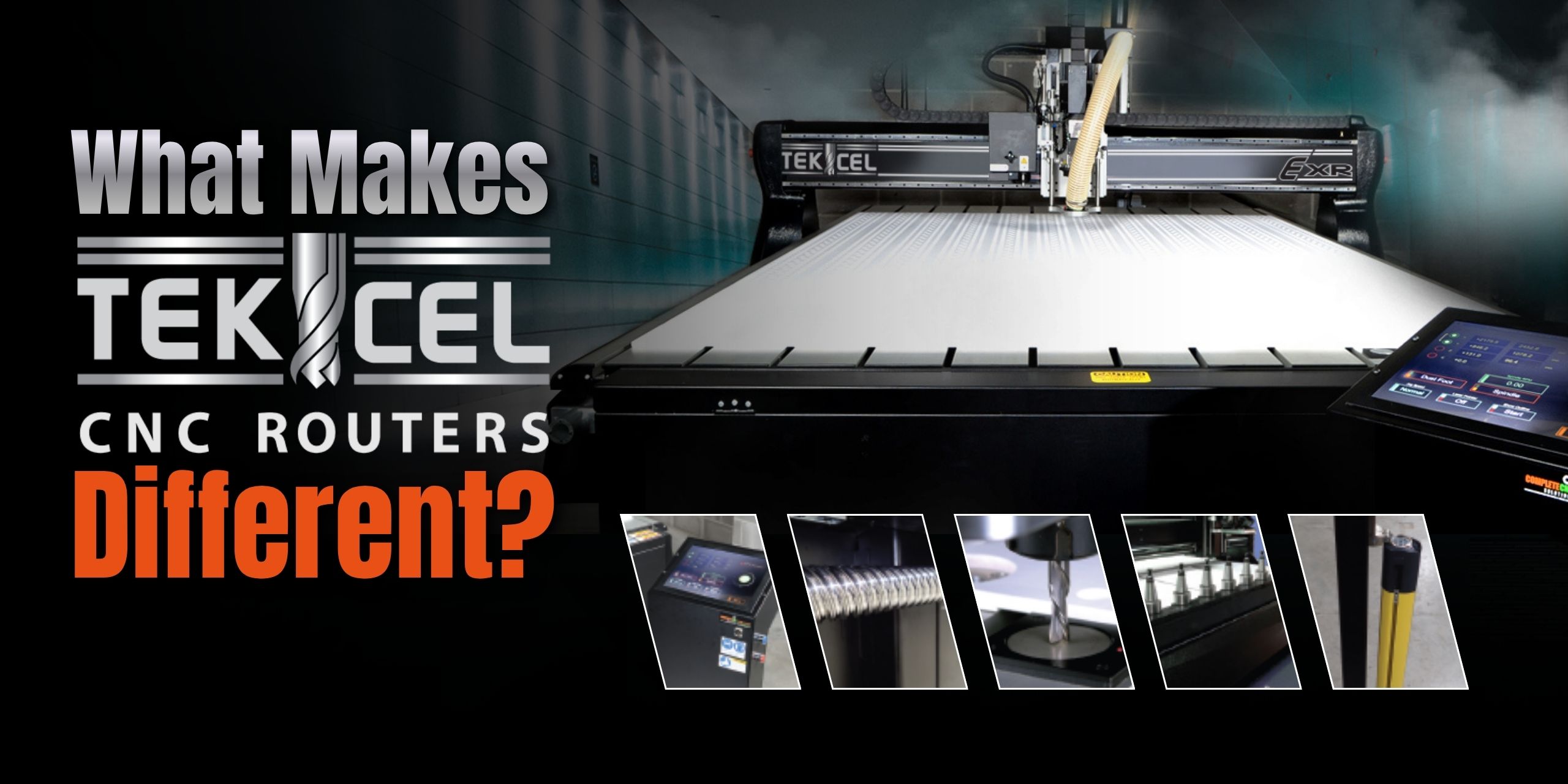
The Tekcel EXR 2m x 3m takes a different approach from many large-format CNC routers. It uses precision-engineered 30mm diameter recirculating ballscrews on every axis, including dual drives on the X-axis.
So, what difference does that make?
1. Controlling Backlash for Greater Accuracy
Rack and pinion systems use a pinion gear running along a toothed rack. They can provide fast movement across long machine beds, which is why they are widely used in CNC machinery. However, wear, adjustment and clearance between the rack and pinion can affect backlash and positioning accuracy over time.
Ballscrews work differently.
Inside the ball nut, recirculating steel balls roll between the nut and screw rather than relying on sliding contact. This reduces friction and allows very precise conversion of rotary motion into linear movement.
For CNC applications where repeatability and positioning accuracy matter, that makes ballscrews an extremely capable drive solution.
On the Tekcel EXR 2m X 3m, 30mm recirculating ballscrews are fitted to X, Y and Z, with two ballscrew drives on the X-axis. Combined with digital servo motors and encoder feedback, this gives the machine a highly controlled motion system suited to demanding machining applications including aluminium, ACM, plastics, acrylics and engineered sheet materials.
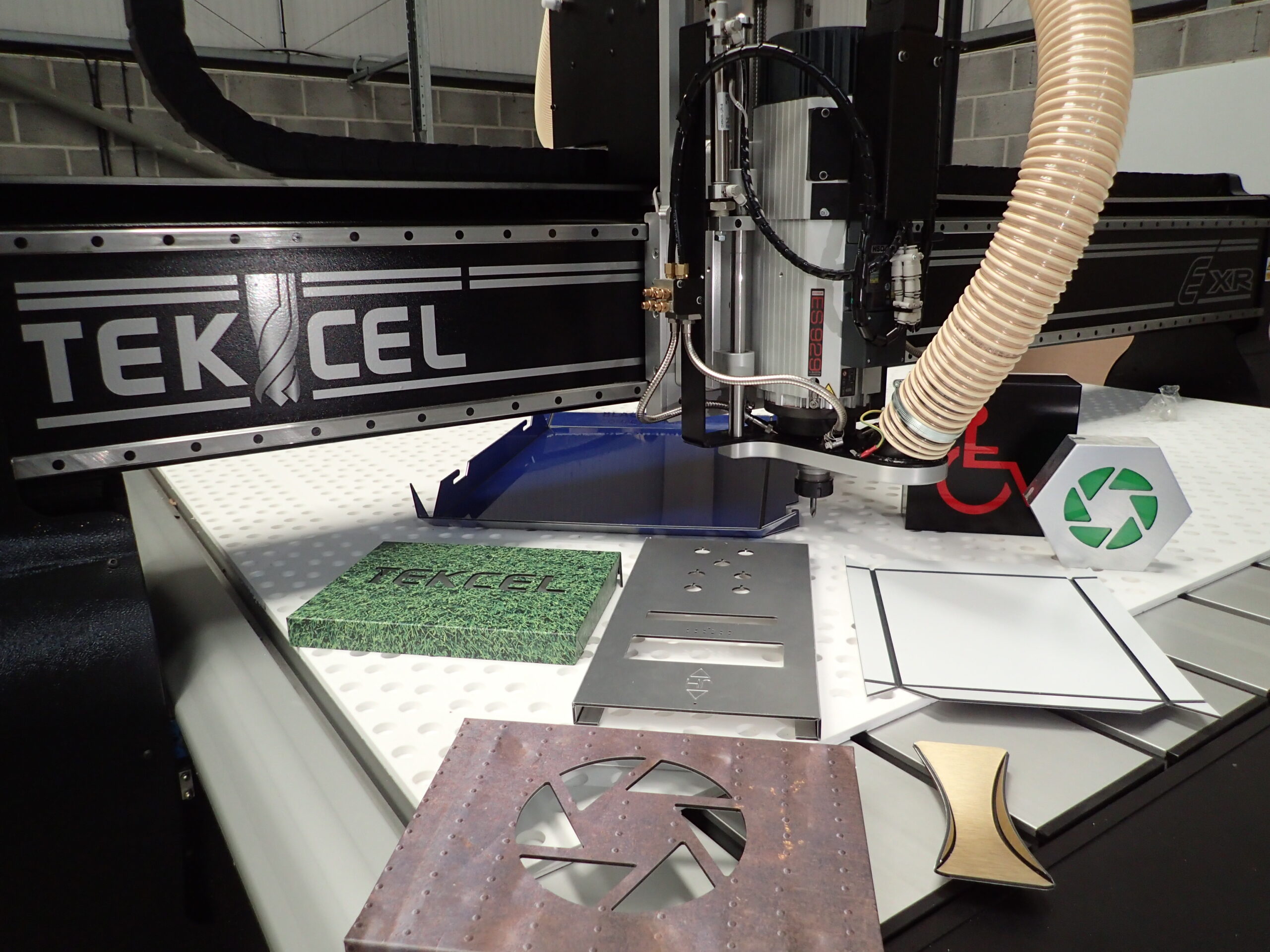
2. Built for Demanding Production
The Tekcel EXR is capable of cutting and positioning speeds of up to 600mm per second, or 36 metres per minute.
Achieving that level of performance consistently requires more than spindle power. The drive system has to control acceleration, deceleration and positioning accurately throughout the machine's working area.
The EXR combines its ballscrew drive system with 1kW digital servo motors with encoders on X (x2), Y and Z.
Rather than operating open-loop, the encoder provides positional feedback to the control system. This gives the machine precise control over axis movement while maintaining the speed required for demanding production environments.
Like any precision mechanical system, ballscrews require correct lubrication and maintenance. Keeping contamination away from the screw and maintaining the lubrication system are important to achieving long service life.
The advantage is the use of rolling contact between the balls, screw and nut, helping to minimise friction while delivering accurate, repeatable linear movement.
3. Looking Beyond the Purchase Price
he true cost of a CNC router is not simply its purchase price.
Accuracy, maintenance requirements, downtime, production speed and the ability to repeatedly produce components within tolerance all contribute to the machine's Total Cost of Ownership.
Rack and pinion systems have their advantages, particularly for very long travel distances, but the quality of the system, its adjustment and ongoing maintenance all influence performance.
Ballscrews offer a different set of strengths. Their rolling contact design provides high mechanical efficiency, excellent repeatability and precise positioning, making them particularly well suited to machines where accuracy and controlled movement are priorities.
That is why Tekcel's decision to use recirculating ballscrews across all axes of the EXR, rather than limiting them to the Z-axis, is an important part of the machine's engineering.
It is a feature you may never see while the machine is cutting, but you will benefit from it every time the machine positions the tool.
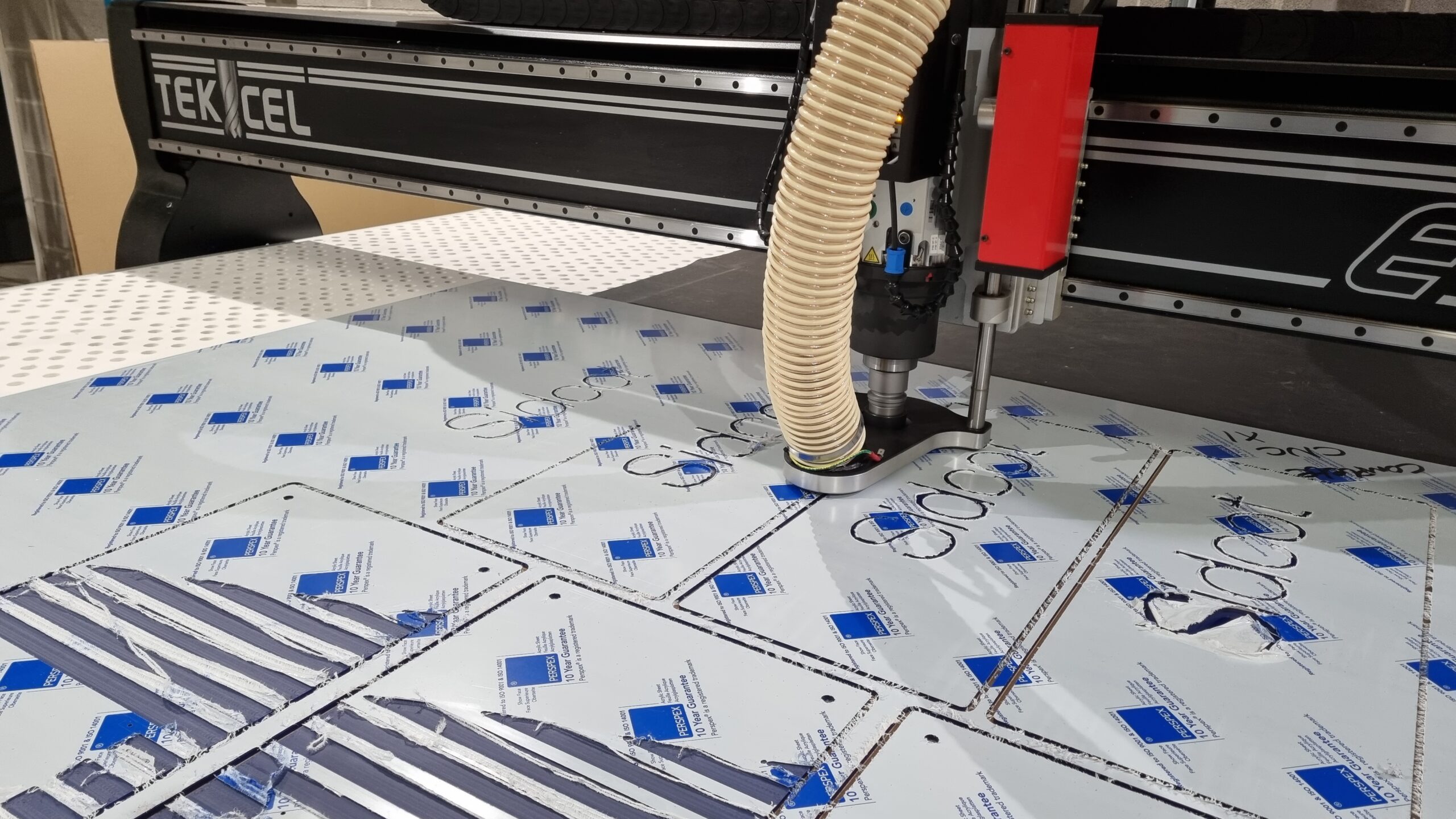
See the Tekcel EXR in Action
Specifications are useful, but seeing a CNC router cutting your own material tells you far more.
Make an appointment to visit us in Cheddar, Somerset, and put the Tekcel EXR through its paces. Bring your files, materials or a particularly challenging job and see how the machine performs in a real cutting demonstration.
Ready to take a closer look at the Tekcel EXR?
Contact our team to arrange a demonstration. Or call: +44 (0) 1934 742 186
Further Blog Posts
Oct / 2026
The Hidden Cost of Rack & Pinion vs Ballscrew CNC Drives
Sep / 2026
Choosing your next CNC router: which work should drive the decision?
Aug / 2026
BS 559-2: Three practical questions for signmakers

Aug / 2026
Routing polycarbonate, HDPE and solid surface: why material versatility starts with the machine
Jul / 2026
How CNC cutting is reshaping retail interiors and displays

Jul / 2026
Why short-run structural packaging is becoming a CNC opportunity
Jun / 2026
The case for an ATC router in a metal fabrication shop
Jun / 2026
What makes the Tekcel EXR CNC Router different?