CUSTOMER LOGIN

Choosing your next CNC router: which work should drive the decision?
Choosing your next CNC router: which work should drive the decision?
One awkward job can loom surprisingly large when you start looking at a new CNC router.
Perhaps it was the panel you couldn't accommodate. The printed shape you had to send elsewhere. Or the enquiry that made you think, “We could do more of that.”
All useful reasons to look. The question is how much say each one gets in the purchase.
You already know what your business makes. The harder part is deciding which work should shape the next machine, especially when regular orders, valuable one-offs and new possibilities all pull the specification in different directions.
Before the options list grows another page, put those requirements through three tests.
Perhaps it was the panel you couldn't accommodate. The printed shape you had to send elsewhere. Or the enquiry that made you think, “We could do more of that.”
All useful reasons to look. The question is how much say each one gets in the purchase.
You already know what your business makes. The harder part is deciding which work should shape the next machine, especially when regular orders, valuable one-offs and new possibilities all pull the specification in different directions.
Before the options list grows another page, put those requirements through three tests.
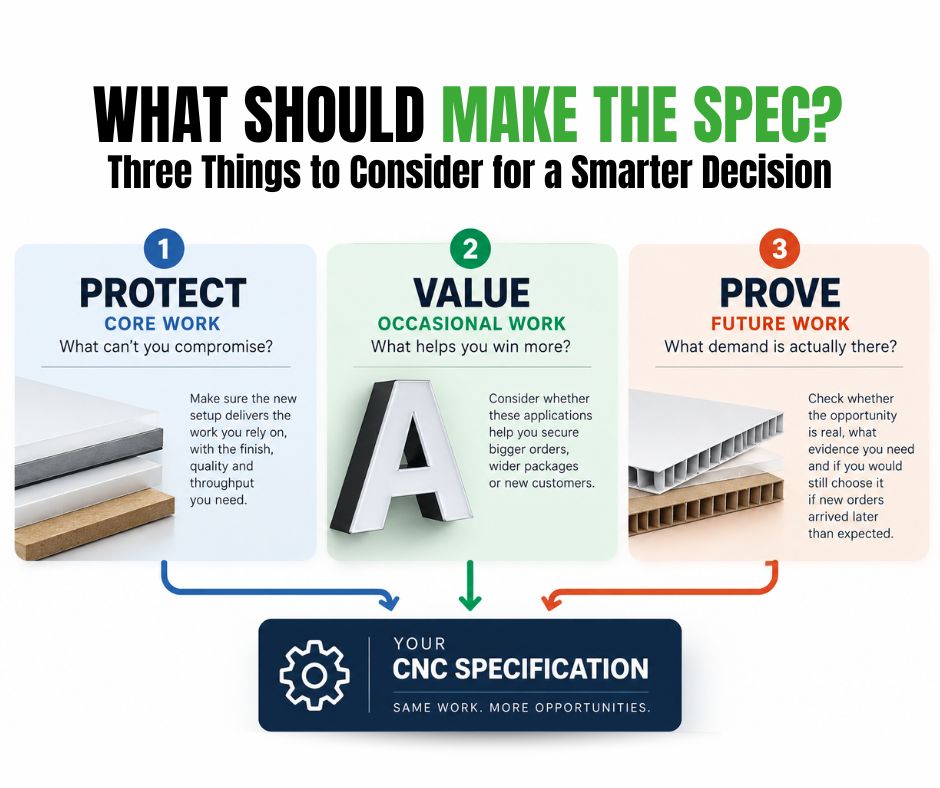
1. The compromise test: what must the new setup protect?
Start with the work you would be least willing to compromise to gain another capability.That is not necessarily your biggest job or your highest-volume product. It could be a repeat order with a demanding finish, or a component that must reach assembly at a particular stage to keep delivery on track.
Ask: if the proposed configuration handles the exciting new application, what still needs proving about our everyday work?
Take that question into the supplier conversation. Define the point at which a representative component is acceptable: the required finish, the batch needed and the operations that remain afterwards. A successful cut is only one part of that picture.
This gives you a baseline against which to assess the proposal. An additional capability can then be assessed alongside requirements that are already clear.
2. The contract test: is an occasional job more important than it looks?
A job that appears twice a year can look easy to dismiss. Until it is the part that helps you secure the rest of a customer's order.For each occasional application, ask: what would we actually lose if we couldn't supply this ourselves?
The answer might be very little: a dependable specialist supplier already handles it well. Or it might affect the scope you can offer, the delivery commitment you can make or your ability to supply a complete package.
That distinction matters. “We occasionally cut this material” is a weak explanation for an option. “This component lets us supply the whole display package” gives it a commercial purpose worth investigating.
Then check the complete route. After the proposed machine has done its part, what still needs finishing, folding, assembly or outside help? Establish how much of the requirement the investment would actually bring within reach.
3. The no-new-orders test: how much depends on work you haven't won?
New applications are a good reason to explore machinery. They also deserve a separate line in the decision.Ask: if those new orders arrived six months later than hoped, would we still choose this configuration?
Treat six months as a discussion prompt, not a forecast. Use a period that matters to your own plans.
If the answer is yes, the capability may have a purpose in the existing workload too. If it is no, identify what evidence would make you comfortable proceeding: a trial order, a clearer customer requirement or an application assessment, for example.
A sample can help establish whether the product can be made as required. Customer evidence helps you judge whether the opportunity deserves investment. Both belong in the conversation.
Put the answers on one page
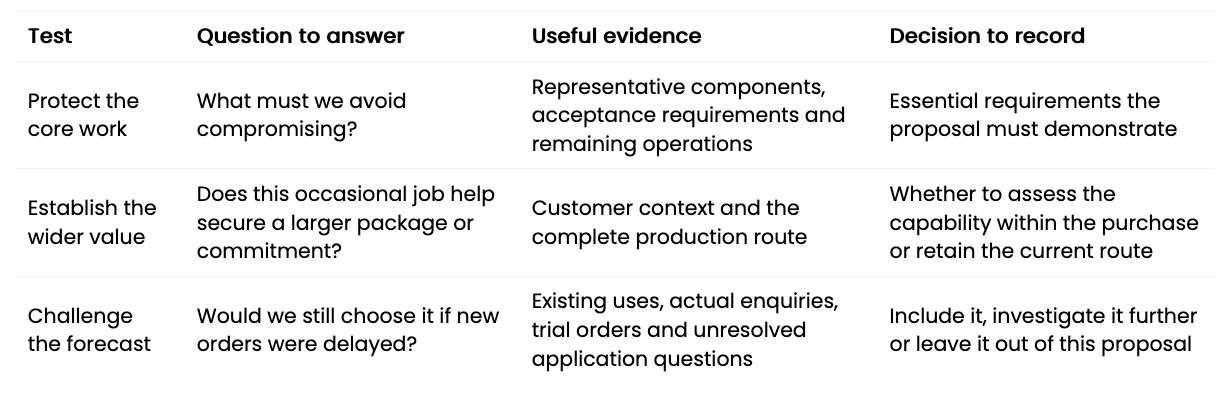
Leaving something out of a proposal does not establish that it can be retrofitted later. If future addition matters, ask the supplier to confirm feasibility and implications for the particular machine.
What this looks like in a sign and display brief
Imagine a business producing rigid panels regularly, supplying occasional shaped printed pieces and exploring knife-cut board displays.
Its panel work sets the requirements the new system must demonstrate. The printed pieces deserve a closer look if supplying them helps win a wider display package. The board work needs its own evidence before determining how much weight it should carry in the specification.
That produces three clear requests: demonstrate the core work, assess the printed application and investigate the proposed board product.
The Tekcel EXR offers configurable capabilities including OptiCam Cut-to-Print registration and OptiCut knife cutting. The useful discussion is where those capabilities fit your requirements, what the proposed package includes and what needs establishing through an application assessment.
The framework will not choose a machine for you. It will give each part of the specification a reason to be there, and make the unanswered questions much easier to spot.
Bring us the work you need to protect, the applications that could widen what you supply and the questions still open. Our team can discuss a Tekcel configuration around that brief.
Talk to us or call 01934 742 186.
Further Blog Posts
Oct / 2026
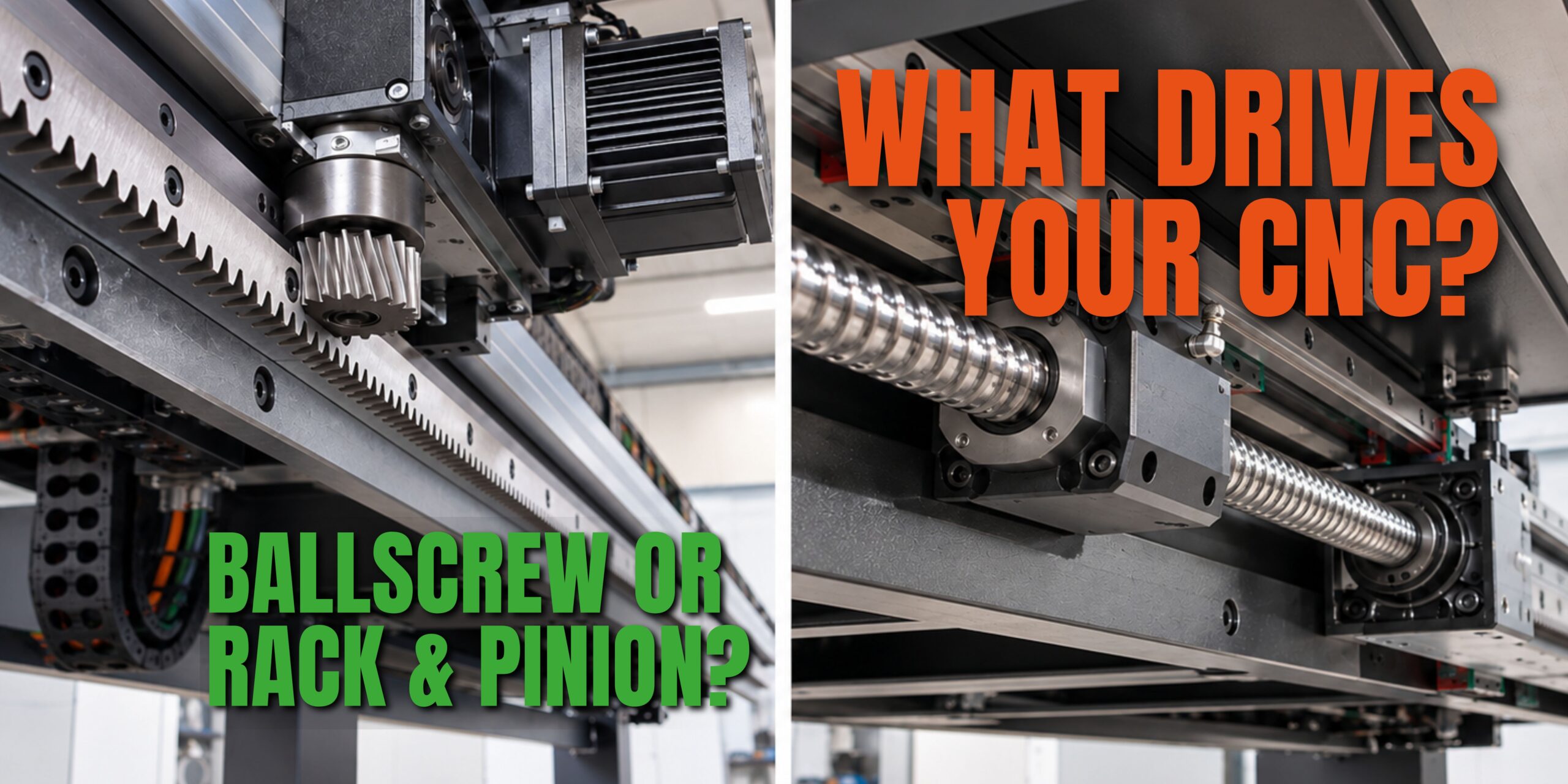
The Hidden Cost of Rack & Pinion vs Ballscrew CNC Drives
Sep / 2026
Choosing your next CNC router: which work should drive the decision?
Aug / 2026
BS 559-2: Three practical questions for signmakers

Aug / 2026
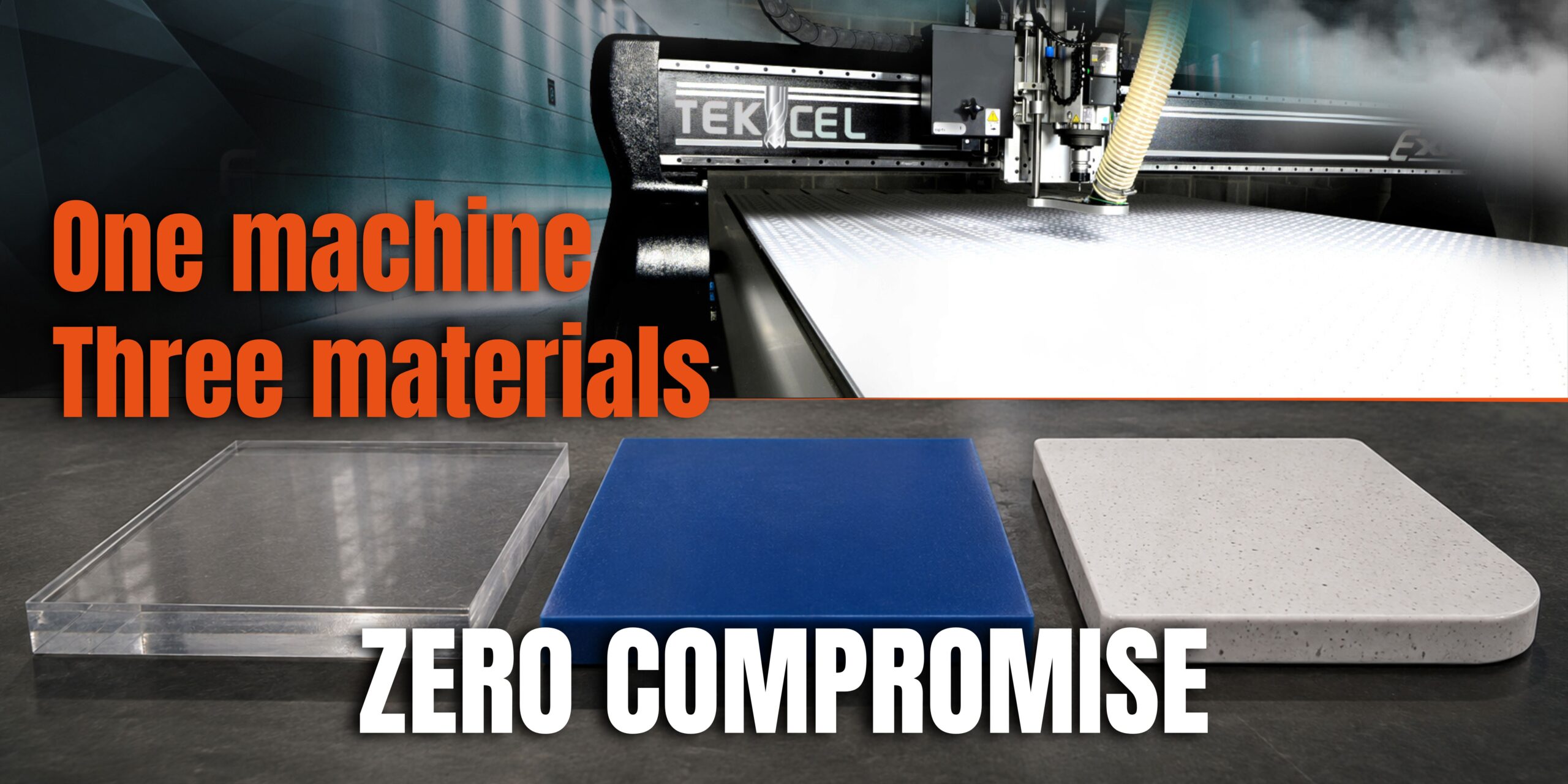
Routing polycarbonate, HDPE and solid surface: why material versatility starts with the machine
Jul / 2026
How CNC cutting is reshaping retail interiors and displays

Jul / 2026
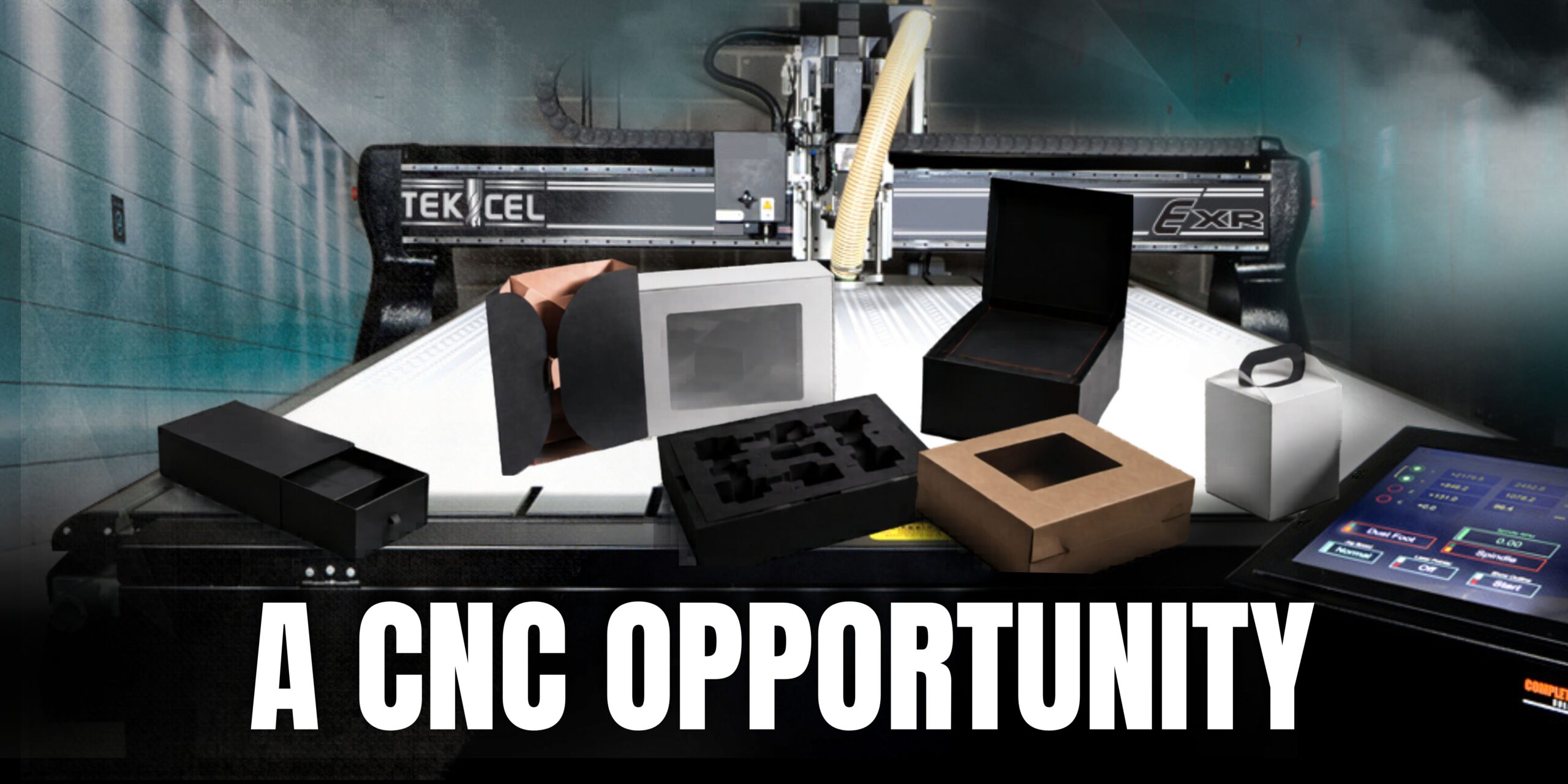
Why short-run structural packaging is becoming a CNC opportunity
Jun / 2026
The case for an ATC router in a metal fabrication shop
Jun / 2026
What makes the Tekcel EXR CNC Router different?