CUSTOMER LOGIN

Compression router bits: when should you use them instead of upcut or downcut tooling?
Compression router bits: when should you use them instead of upcut or downcut tooling?
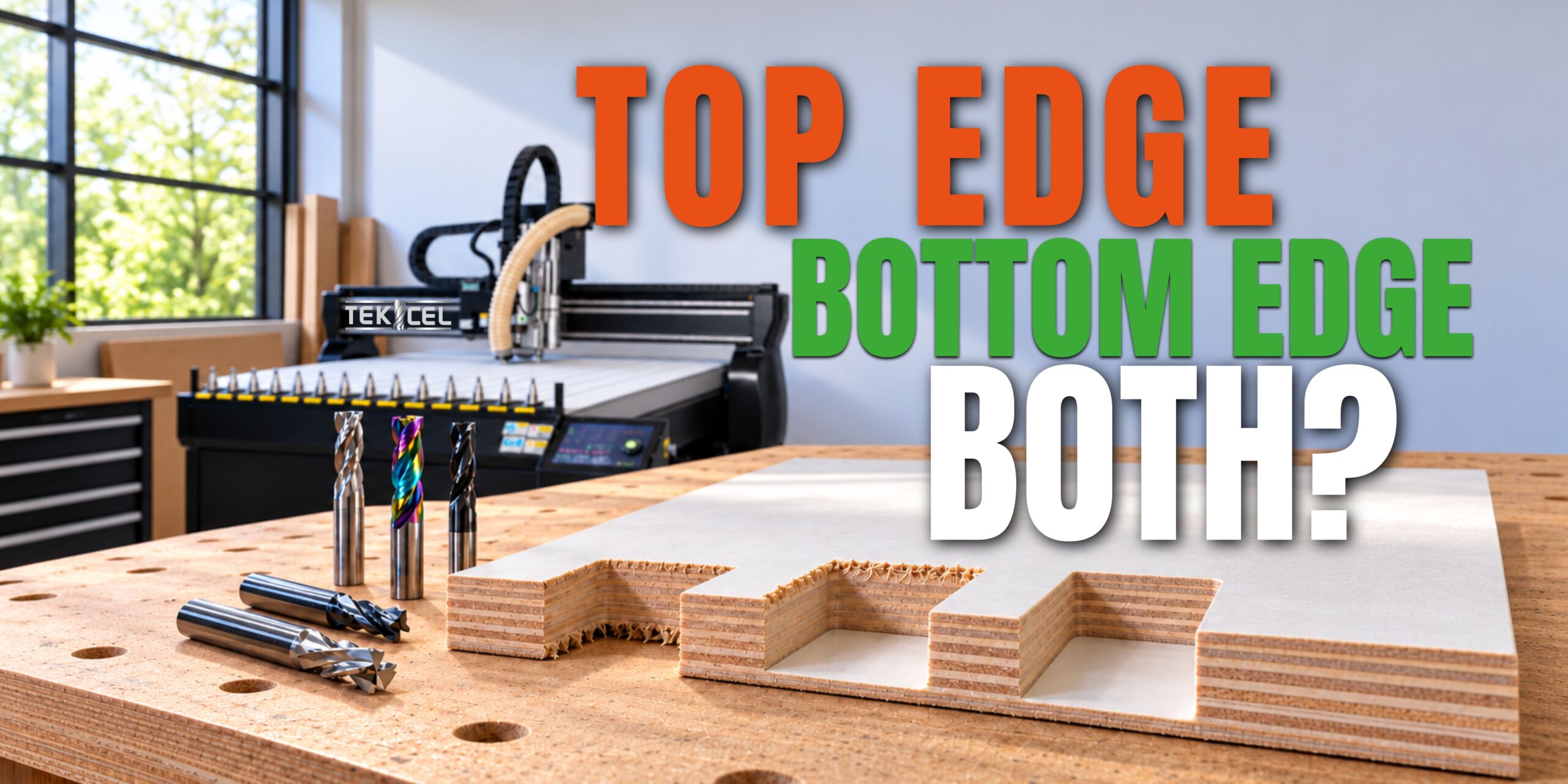
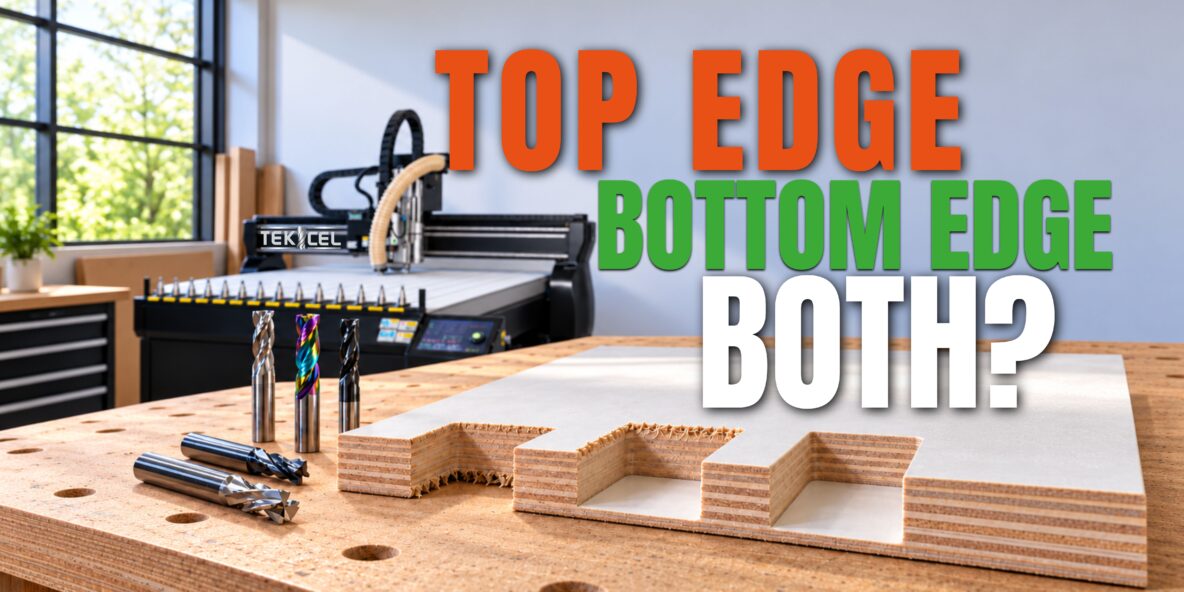
A clean cut on the top face of a sheet does not always mean you will get the same result underneath. Upcut, downcut and compression tooling all move chips and fibres differently, and with plywood, veneered boards and laminated panels that can have a noticeable effect on edge quality.
Compression router bits are designed for jobs where you want to protect both the top and bottom edges, but they are not automatically the best cutter for every sheet or every job.
How does a compression router bit work?
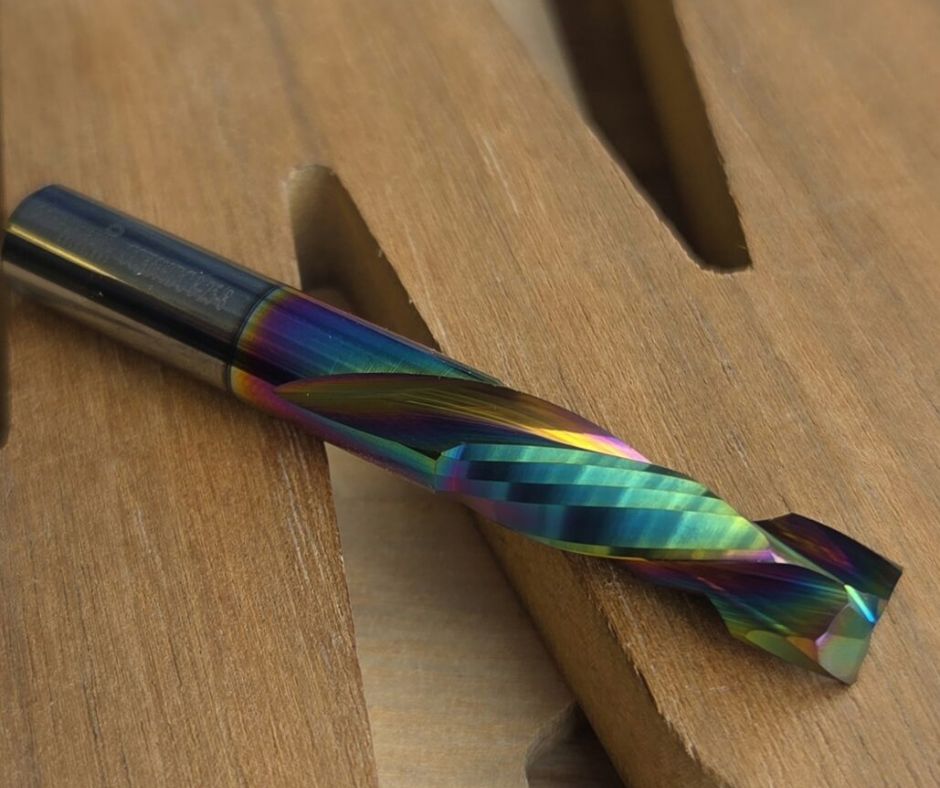
A compression cutter combines upcut and downcut geometry within the same tool. The tip section is upcut, while the upper flute section is downcut, so once both sections are engaged in the material the cutting action works towards the centre of the sheet rather than pulling fibres away from either face.
This is why compression tooling is often used for plywood, veneered boards, laminated panels and other sheet products where a clean finish is needed on both sides.
The depth of the first pass is important because the cutter has to reach beyond the upcut section before the top face is being cut by the downcut portion. The length of that upcut section varies between tools, so there is no single first-pass depth that works for every compression cutter.
Before programming the job, check the cutter geometry against the material thickness, first-pass depth and total cutting length. A tool with a relatively long upcut section may also be unsuitable for thinner sheets if both cutting directions cannot engage as intended.
Compression cutters are intended for profile cutting rather than plunging or drilling. Driving the tool straight down into the material can generate excessive heat, which can scorch the workpiece and damage the cutter. We use the CAM software to control how the tool enters and leaves the cut, using a ramped entry with lead-in and lead-out moves rather than a direct vertical plunge.
Where compression tooling is a good fit
Compression cutters are useful where breakout on either face would create extra finishing, visible damage or rejected parts. That could be plywood going straight into assembly, a veneered panel with both faces on show, or a laminated board where chipped edges would need reworking.
In joinery, cabinet making, furniture, display production and similar work, the benefit is often less about cutting faster and more about getting a cleaner component straight off the router.
When an upcut or downcut cutter may be a better fit
An upcut tool pulls chips upwards and away from the cut, so it can be a better choice where chip evacuation is the main concern, particularly in deeper cuts or heavier material removal. The upward cutting action can lift fibres or veneer at the top edge, so it may be less suitable where that surface needs to stay clean.
A downcut cutter works in the opposite direction and helps protect the top surface. It can suit shallower operations or jobs where the top edge is the priority, but the chips are pushed down into the cut rather than lifted away.
The right choice comes back to the material, cut depth, chip clearance and the finish needed on each face.
The cutter is only part of the result
Workholding still has a big influence on edge quality. A full sheet may hold securely under vacuum, while smaller nested components can become harder to control as material is removed and the available vacuum area reduces.
Depending on the job, that may mean using tabs, leaving an onion-skin pass, changing the cutting sequence or adding another form of workholding. Feed rate, spindle speed and cutter condition also need to suit the material and tool.
A compression cutter with the right geometry can still give a poor result if the component moves or the cutting setup is wrong.
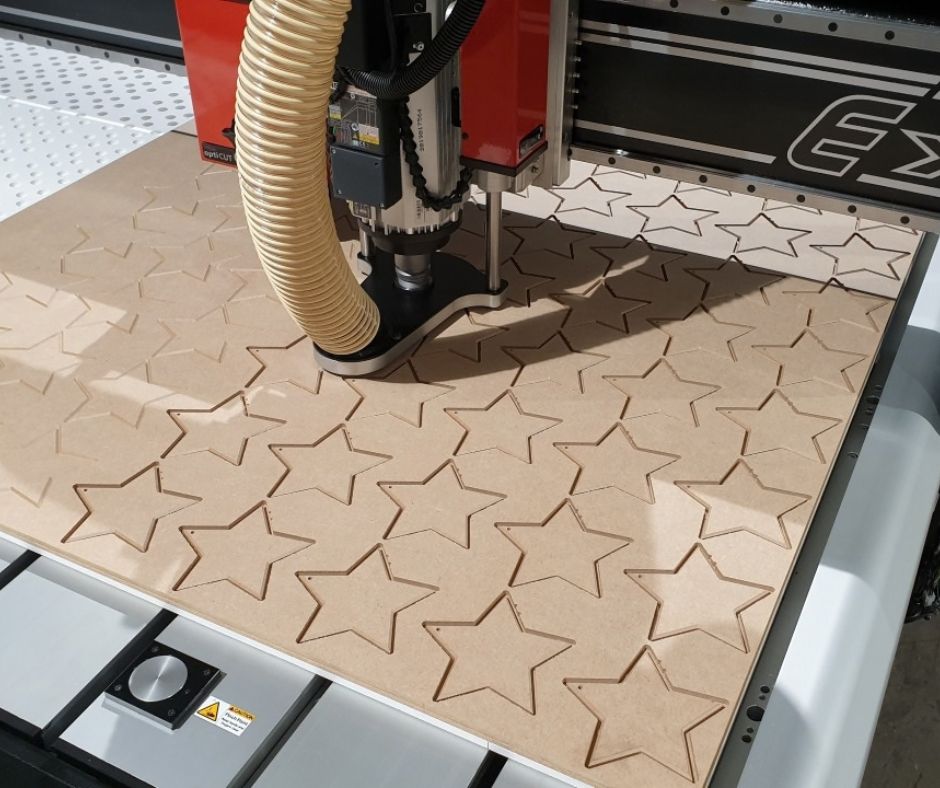
Choosing the right cutter for the job
If both faces need a clean edge, compression tooling may suit the job. If chip evacuation is the main priority and the top edge is less critical, an upcut tool may be a better fit. If the top surface needs protecting and the underside is less critical, a downcut cutter may be more suitable.
From there, check the material, thickness, first-pass depth, component size, hold-down, cutter diameter and chip clearance.
If you are unsure which cutter is the best fit, we are here to support your tooling queries. Tell us about the material, component and finish you need, and we can help you choose the right tool for the application.
 (opens in a new tab)
If a 2m x 3m router is the right fit for your workshop and you are replacing an existing CNC router or digital cutter, you can see what is included in our Trade In, Trade Up offer here.
Further Blog Posts
Nov / 2026
Compression router bits: when should you use them instead of upcut or downcut tooling?
Oct / 2026
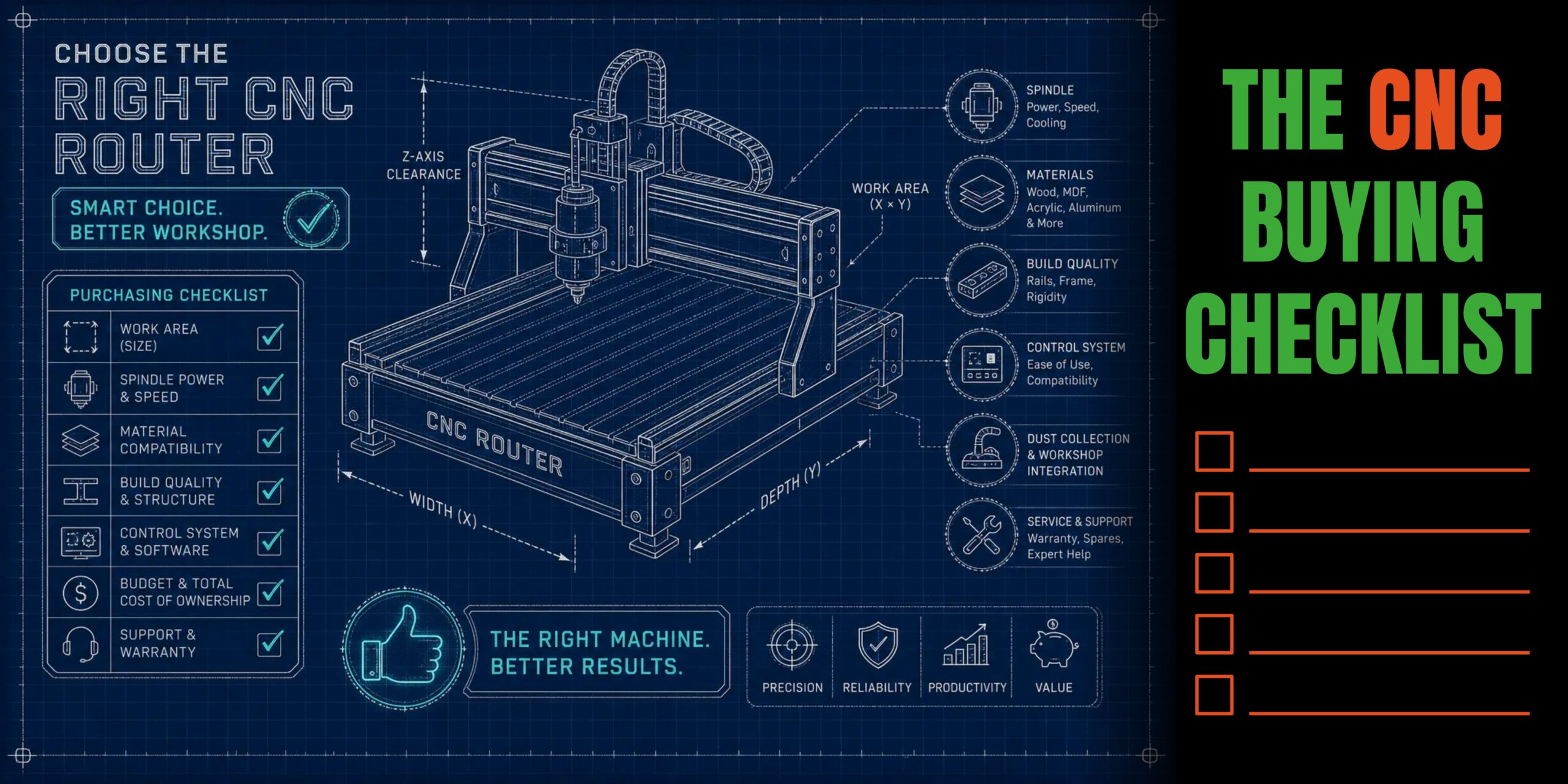
CNC router buying checklist: what to compare before you invest
Oct / 2026
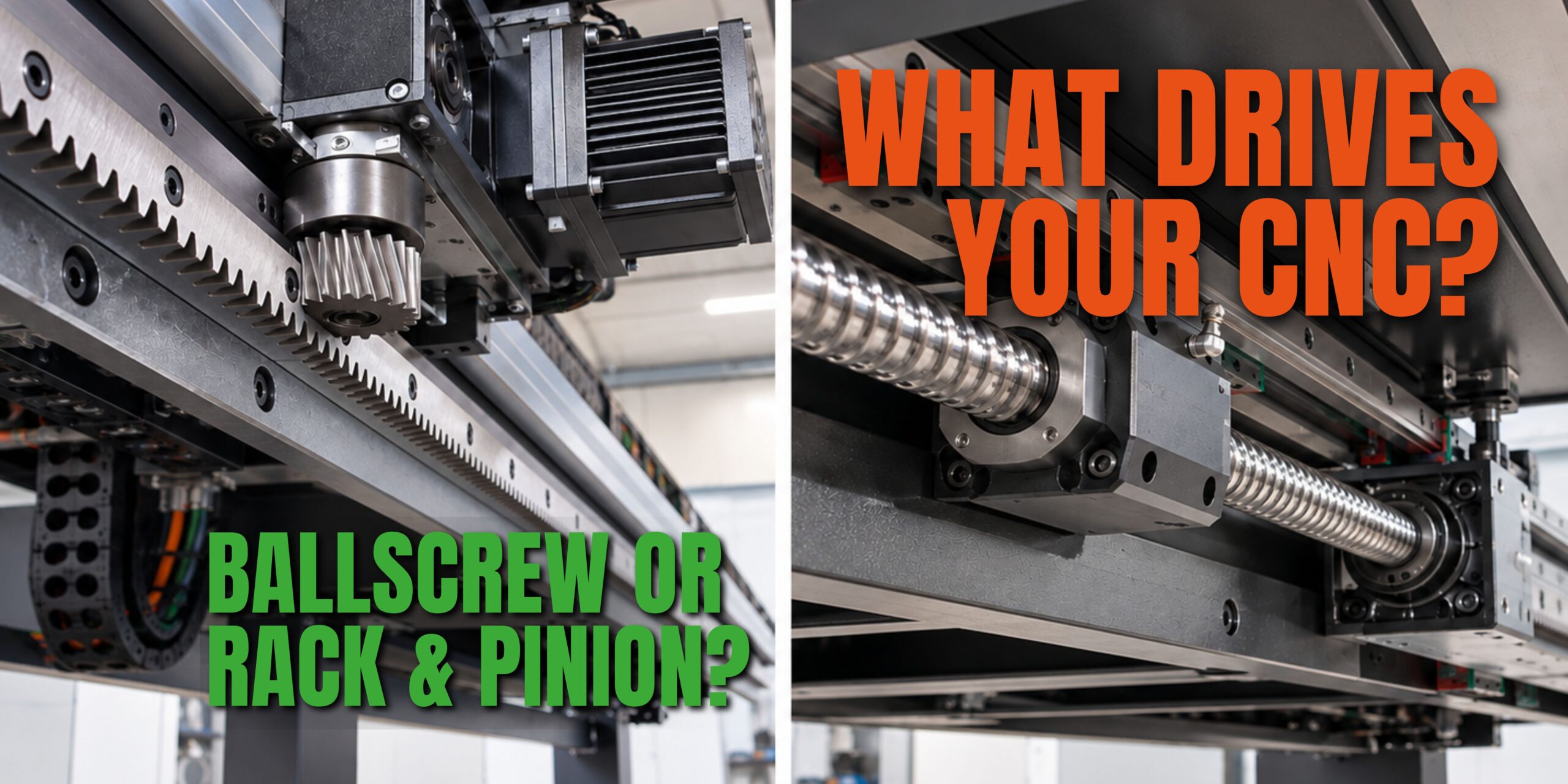
The Hidden Cost of Rack & Pinion vs Ballscrew CNC Drives
Sep / 2026
Choosing your next CNC router: which work should drive the decision?
Aug / 2026
BS 559-2: Three practical questions for signmakers

Aug / 2026
Routing polycarbonate, HDPE and solid surface: why material versatility starts with the machine
Jul / 2026
How CNC cutting is reshaping retail interiors and displays

Jul / 2026
Why short-run structural packaging is becoming a CNC opportunity