CUSTOMER LOGIN

How CNC cutting is reshaping retail interiors and displays

How CNC cutting is reshaping retail interiors and displays

For many brands, retail fit-out is doing more of the selling now. It has to hold attention, reflect the brand clearly, and make better use of every part of the footprint. That changes the role of fabrication.
CNC cutting is becoming more important in that shift because it gives retail designers and manufacturers far more control over how shelving, counters, branded features, and presentation structures are produced. The value is not just in cutting shapes accurately. It is in making retail spaces more usable, more consistent, and more commercially effective.
That matters because retail and display work exposes weak production systems quickly. It is one thing to cut a panel cleanly in the workshop. It is another to produce fitted counters, shaped display features, repeat site components and branded elements that still look right once they reach the store.
Retail space has to work harder than it used to
Retailers are often working around narrow walkways, difficult corners, structural columns, shallow footprints or wall space that is easy to ignore but too valuable to waste. Floor space is expensive, and standard fixtures do not always solve that well.
Custom-cut shelving, fitted counters and wall-mounted display elements can be made to suit the real layout rather than forcing the layout to work around standard sizes. That makes it easier to turn overlooked areas into selling space without making the store feel crowded or badly planned.
The benefit is practical. Better use of the footprint improves product visibility and gives the retailer more room to present stock properly within the same site.
Retail fit-out work rarely stays within standard panel work for long. Once the job moves into shaped counters, fitted wall sections, layered features and awkward-space solutions, the value of a more stable CNC platform becomes much clearer.
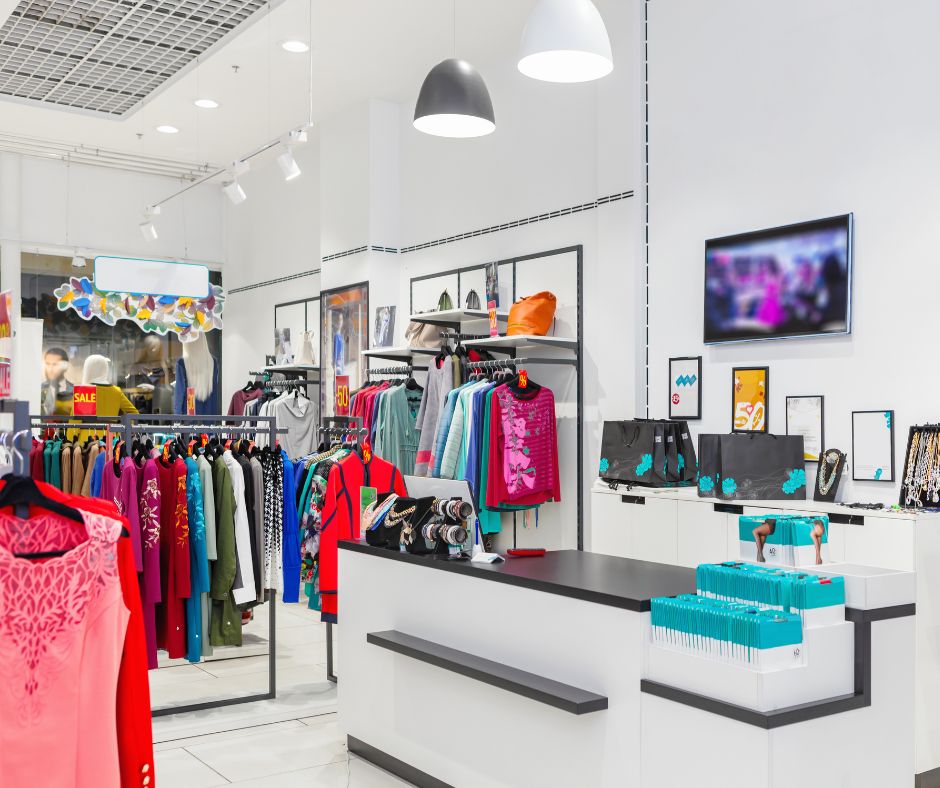
Better visual merchandising depends on more than styling
The physical structure behind the display matters just as much as the product selection or colour palette. If the framing is weak, the lines are clumsy, or the display looks temporary, the merchandising loses impact no matter how strong the concept looked in a deck.
CNC cutting allows shaped components, layered panels, detailed framing elements and branded features to be produced cleanly and consistently. That gives designers more freedom to create focal pieces that draw attention properly rather than blending into the background.
There is a visible difference between a display that looks fabricated to do a job and one that feels designed as part of the brand experience. That difference can affect how long customers engage with key products and how premium the environment feels overall.
This is one of the reasons retail and display work can be so revealing. Decorative edges, shaped profiles, layered forms, and branded details all make finish quality more visible. If the machine, tooling, workholding, or setup discipline are weak, the retail environment gives that away quickly.
That is also where a stronger platform becomes more useful than a machine that only covers the basics. A Tekcel router, for example, can support shaped ACM panels, acrylic features, wood-based display structures and printed elements on one platform, which is exactly the kind of mixed production many retail and display businesses are being asked to handle more often.
Consistency matters more once there is more than one site
Brand consistency across multiple locations is difficult to protect if the fabrication process still allows too much variation. A fixture that feels strong in one site but slightly different in another weakens the visual identity over time, especially when multiple campaigns, updates, and store teams are involved.
CNC-based production reduces that drift.
When counters, shelving systems, branded panels, and presentation structures are cut from repeatable digital files, the business has a better chance of carrying the same standards from one site to the next. That matters for national rollouts, refresh programmes and any retail group trying to create a recognisable environment across different locations.
Consistency is not just an aesthetic benefit. It also helps to create trust. Customers notice when a brand environment feels coherent.
This is where digital repeatability starts to matter in a more commercial way. The question is not only whether the router can produce a good-looking part once. It is whether the process can produce the same part again and again for different stores, different dates, and different rollout phases without the work slowly drifting off standard.
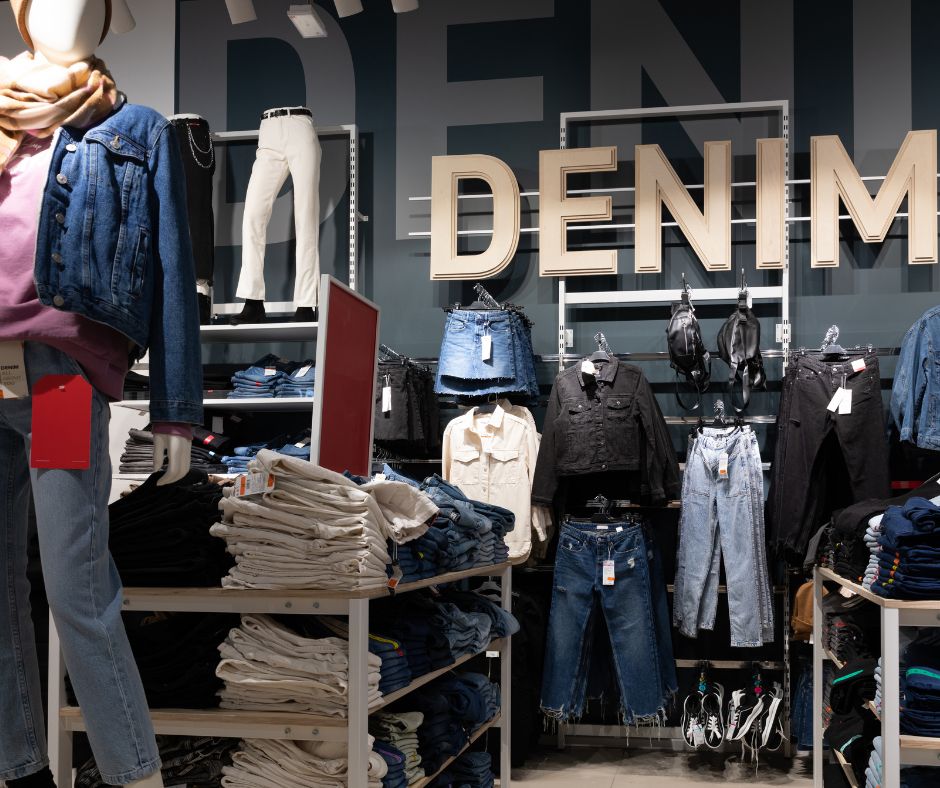
Flexibility has become part of the job
Seasonal campaigns, launches, promotions, and changing product priorities all create pressure to refresh parts of the space more often. That means the fabrication behind the store has to support change, not resist it.
This is another area where CNC-cut components add value.
They make it possible to create modular sections, replaceable panels, and fitted pieces that can be updated without rebuilding everything around them. That makes retail changeovers easier to manage and reduces the cost of refreshing presentation across the year.
For businesses trying to stay visually current without replacing entire fixtures every time the campaign changes, that is a real advantage.
This also changes what flexibility means in a router. In retail production, flexibility is not just about one machine handling different materials. It is also about moving through different component types, job sizes, and update cycles without changeovers becoming slow or fragile. That is where tool capacity, control stability, and overall production readiness begin to matter more than headline claims alone.
For businesses watching where the market is heading, that is a useful distinction. The demand is not only for more custom work. It is for custom work that can still be refreshed, repeated and rolled out without the process becoming heavier every time the brief changes.
Installation quality still shapes the result
Even the best retail design can lose impact if installation becomes slow, awkward or visibly inconsistent. One of the less glamorous but more important benefits of precision-cut CNC components is that they help installation run more cleanly. Elements that are manufactured accurately are easier to assemble, easier to align and easier to replace later if the store changes again.
That matters because shopfitting and display work often happens under time pressure. Delays on site are expensive. Poor fit affects the finish. Replacement parts become harder to manage if the original fabrication was never consistent to begin with.
Better cut accuracy does not just improve production. It protects the final environment once the components leave the workshop.
This is important because shopfitting work often punishes small inaccuracies late and expensively. A part that is only slightly out in the workshop can create delays, visible compromise or rework on site. Retail fabrication therefore tends to reward machines that hold tolerances steadily, maintain finish quality and reduce the need for “it will do” corrections once the job leaves the bed.

What retail and display work is starting to demand from a router
If retail interiors and branded display work are a meaningful part of the output, then the machine requirement goes further than basic spindle power or bed size.The more useful questions are:
- Can the machine hold finish quality on visible decorative work as well as routine cutting?
- Can it move cleanly between fitted pieces, shaped features, panels and branded elements without constant manual disruption?
- Can it support different materials and job types without the whole process becoming unstable?
- Can it repeat accurately enough for multi-site rollout work?
- Can it produce components that are easier to install, align and replace later?
Those questions are more valuable because they tie the machine directly to the commercial reality of the work. Retail and display production is rarely judged only at the point of cut. It is judged on how the finished space looks, how well it fits, how easily it rolls out and how confidently it can be refreshed again.
That is why routers built as broader production platforms are increasingly relevant here. A Tekcel EXR, for example, is designed to handle a mix of boards, plastics, acrylics, composites and printed work on one machine, with the kind of tool capacity and control stability that makes mixed retail production easier to manage.
Retail fabrication is now part of the customer experience
Retail interiors are no longer just operational spaces. They are part of how the brand is experienced.
That means the fabrication behind them has a bigger job to do. It has to support better use of space, stronger visual merchandising, cleaner consistency across sites and smoother refreshes over time.
That is why CNC cutting is reshaping retail interiors and displays. It allows the physical space to work harder, present better and hold together more effectively as a branded environment.
For retailers, shopfitters and display producers, that is not a small change in production method. It is a more effective way to build spaces that need to perform commercially as well as visually.
The takeaway is simple: retail and display work rewards a platform that can combine finish quality, repeatability, flexibility and installation-ready accuracy in one process. That is the level the machine should be judged against, not just whether it can cut the shape.
If retail and display work is asking more of the machine than your current setup can comfortably deliver, the Tekcel EXR Trade-In Programme gives you a practical route to upgrade without the usual disruption around replacing older equipment.
See how the Trade-In Programme works.
Further Blog Posts
Sep / 2026
Choosing your next CNC router: which work should drive the decision?
Aug / 2026
BS 559-2: Three practical questions for signmakers

Aug / 2026
Routing polycarbonate, HDPE and solid surface: why material versatility starts with the machine
Jul / 2026
How CNC cutting is reshaping retail interiors and displays
Jul / 2026
Why short-run structural packaging is becoming a CNC opportunity
Jun / 2026
The case for an ATC router in a metal fabrication shop
Jun / 2026
What makes the Tekcel EXR CNC Router different?
May / 2026
5 signs your CNC setup is making training harder