CUSTOMER LOGIN

Why short-run structural packaging is becoming a CNC opportunity
Why short-run structural packaging is becoming a CNC opportunity
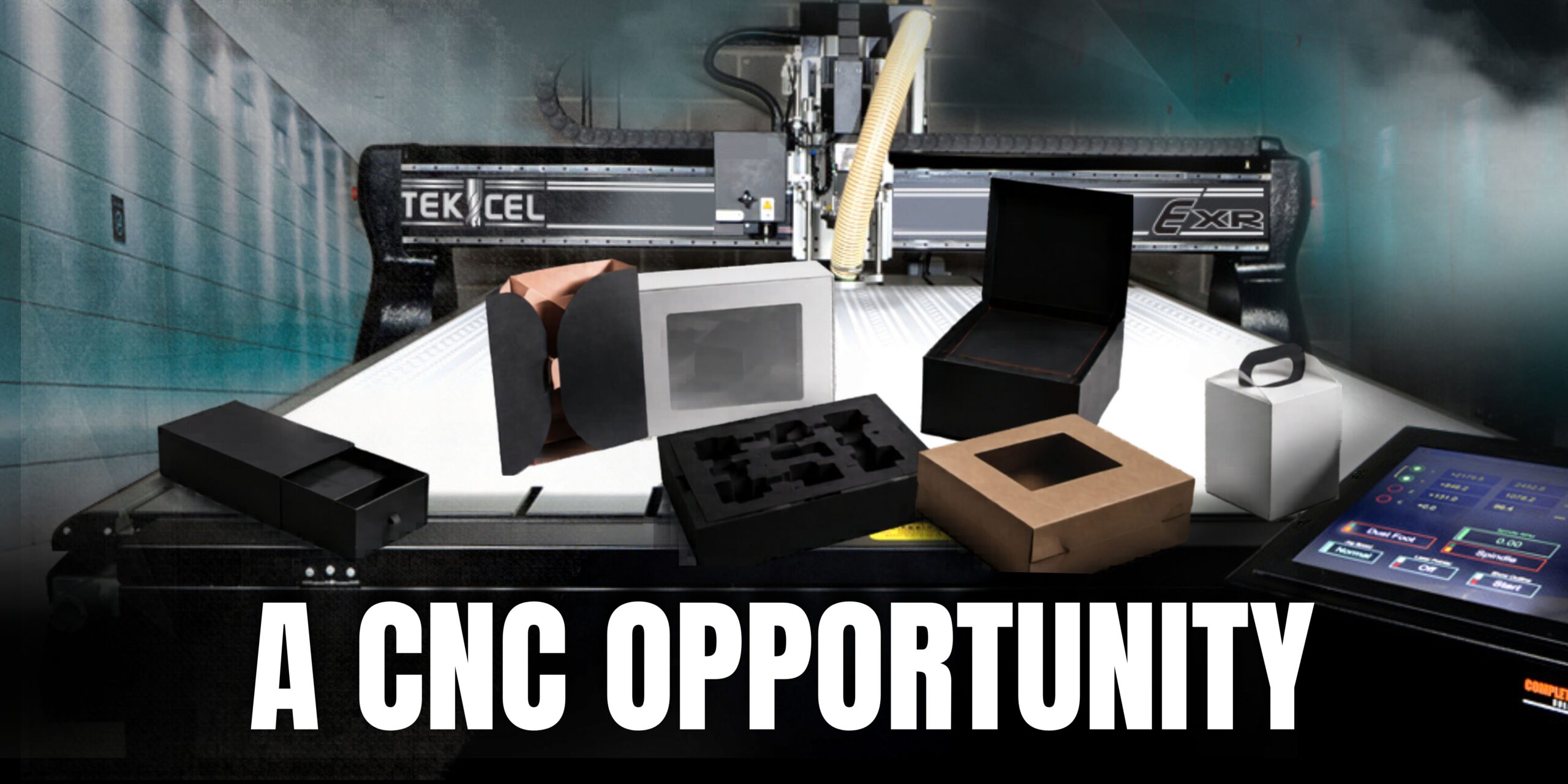
Short-run structural packaging is sitting in an awkward gap.
It is often too short to justify the cost, lead time and rigidity of a traditional tooled die, but too important to be treated like a rough prototype. Brands still want it to look sharp. Campaigns still need to launch on time. Samples still need to hold up in front of buyers. Limited runs still have to feel commercially real.
And not all CNC routers are set up to handle structural packaging work cleanly, repeatedly and without turning every short run into a fragile workaround.
Not every packaging job wants a die
If volumes are high, shapes are fixed and repeat demand is clear, a tooled process can be the right route. But many packaging jobs do not arrive like that anymore.
More brands are testing concepts in smaller quantities. Campaigns have shorter runs. Product launches move faster. Variants multiply. Limited editions appear more often. That changes the economics of the packaging job.
Where the run is small or the design is still evolving, investing in a traditional die can create too much cost too early. The business needs a process that can move faster and adapt more easily.
This is not just about having a router on the floor
A short run often matters because the brief is still moving. The supplier needs to move from file to finished sample or short production run without the delays that come with tooling manufacture, repeated die changes or committing too early to one fixed outcome.
That does not automatically make every router a good packaging platform.
Short-run structural packaging asks more of the setup than simple profile cutting. The work may involve printed rigid media that needs accurate registration, semi-rigid materials that suit knife cutting rather than routing, or repeated format changes that become slow if tool changes and setup steps keep interrupting the flow. That is where the gap opens up between owning a router and being properly equipped for this category of work.
Precision still matters when the volume stays low
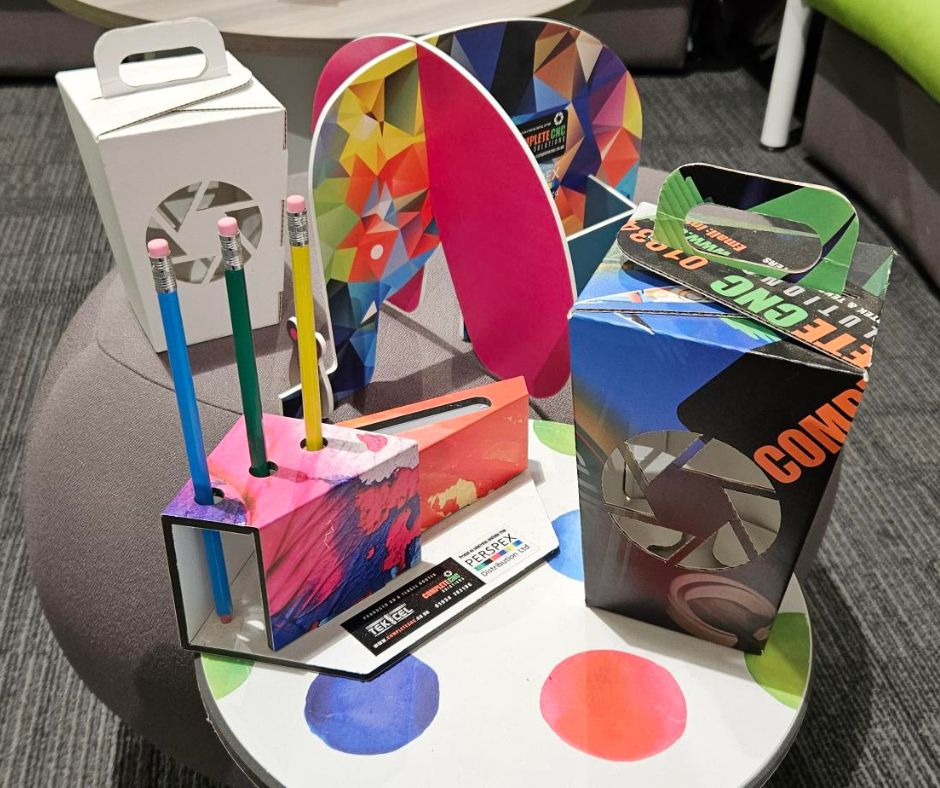
Some of the most demanding packaging work happens in short runs because the packs are being used in launches, presentations, premium mailers, prototypes, influencer kits or short-cycle campaigns where the standard still needs to be high.
Cut quality, registration and fit still have to hold up. The packaging still has to fold, present and protect properly.
That rules out the idea that CNC packaging work is only rough prototype territory. In the right setup, it becomes a finishing route for jobs that still need structural precision even when the volume stays low.
What packaging work starts to demand
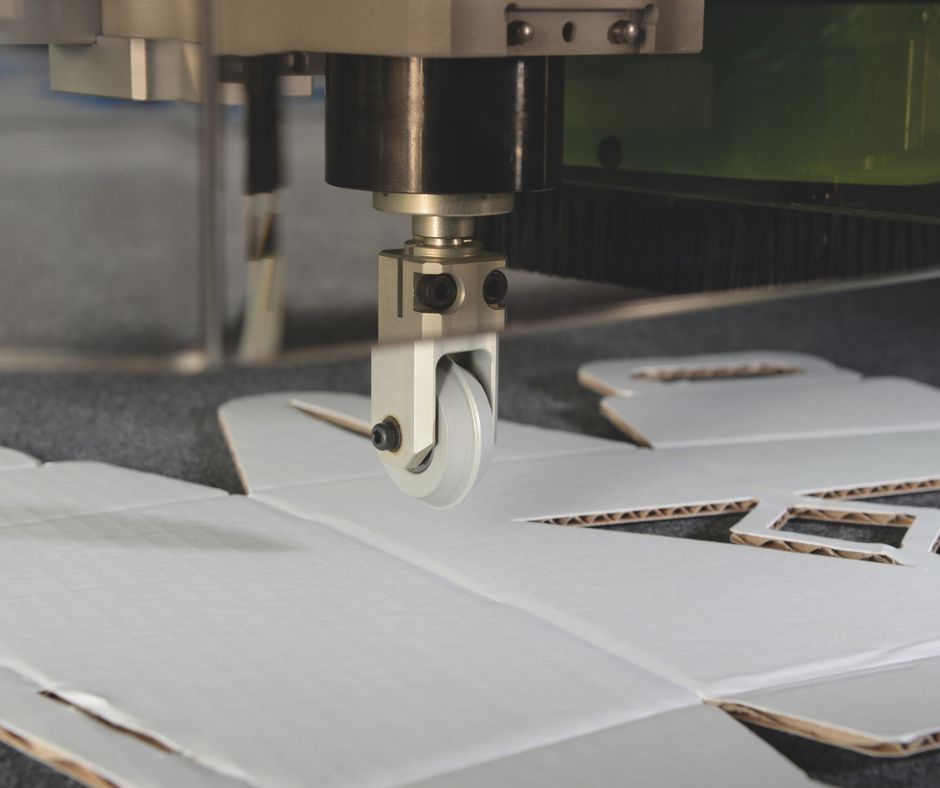
With OptiCam, a Tekcel system can register around printed rigid media accurately enough to support cut-to-print packaging and presentation work. With OptiCut, the same platform can knife cut and crease flexible or semi-rigid materials that would not be a natural fit for routing alone. On the EXR, the ATC and broader production platform also make it easier to move between different tools, cut types and job demands without slowing every short run down with manual disruption.
This is where the difference between routing capability and packaging-ready capability becomes much clearer. The same CNC platform can support thicker or tougher rigid work, contour-cut printed materials and knife-based packaging operations without forcing the producer into completely separate equipment logic every time the brief changes.
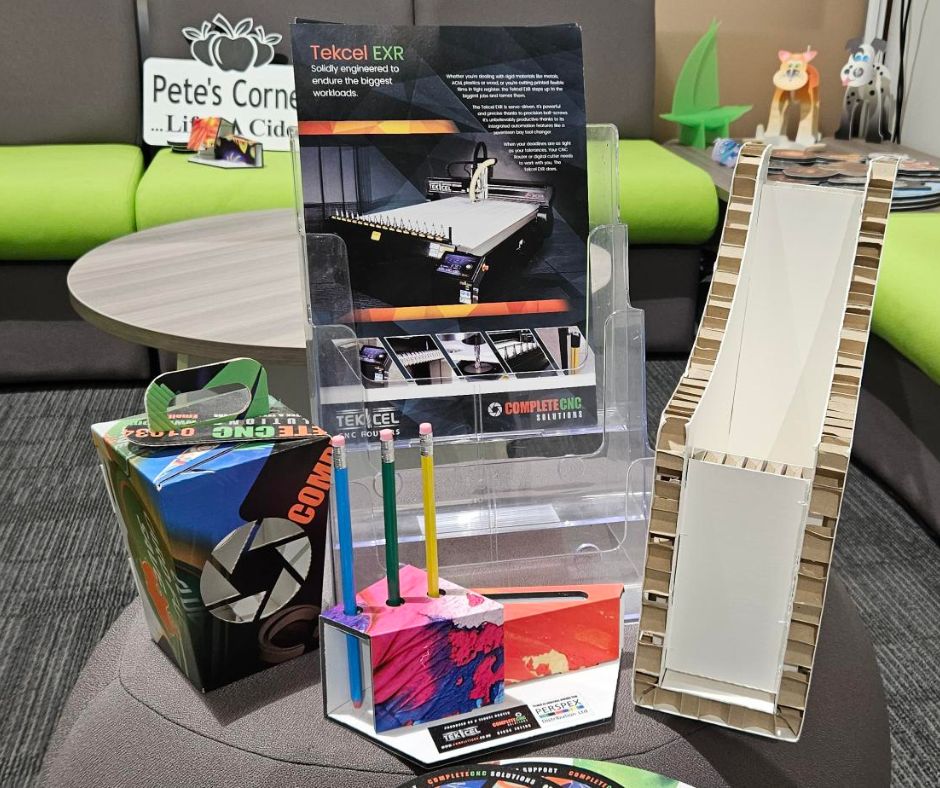
For print finishers and display producers, that opens up a more useful kind of responsiveness. Instead of stopping at flat print or basic routed forms, they can move further into structural packaging, sample packs, premium presentation formats and campaign-led short runs with a setup that is better matched to the way those jobs actually arrive.
That does not replace die-cutting. It gives the business a stronger option for the jobs that need speed, variation and structural credibility without the commitment of a dedicated die.
What this kind of work should make you look for in a CNC setup
If this kind of work is becoming more relevant, the setup has to support it repeatedly without the process becoming slow, fragile or too labour-heavy to price properly.
That usually means looking for:
- stable cut quality on short, varied jobs
- clean file-to-output workflow with low setup drag
- registration capability for printed work where needed
- knife cutting or creasing capability for semi-rigid or flexible materials
- enough tool capacity and control stability to handle revised formats without constant disruption
- a platform that can sit comfortably alongside print, display or finishing work rather than forcing a completely separate process
The jobs in the gap are usually the ones worth watching
These jobs sit in a space that conventional processes do not always serve well. They need precision, but not always a die. They need flexibility, but still have to look commercially credible. They need speed, but not at the expense of structure.For businesses already equipped with routing capability, the opportunity is real. But it does depend on how far that capability really goes.
If short-run structural packaging is becoming more relevant to your customers, it may be time to look at whether your current routing setup is agile enough to support it properly. Speak to our team.
Further Blog Posts
Aug / 2026
BS 559-2: Three practical questions for signmakers

Aug / 2026
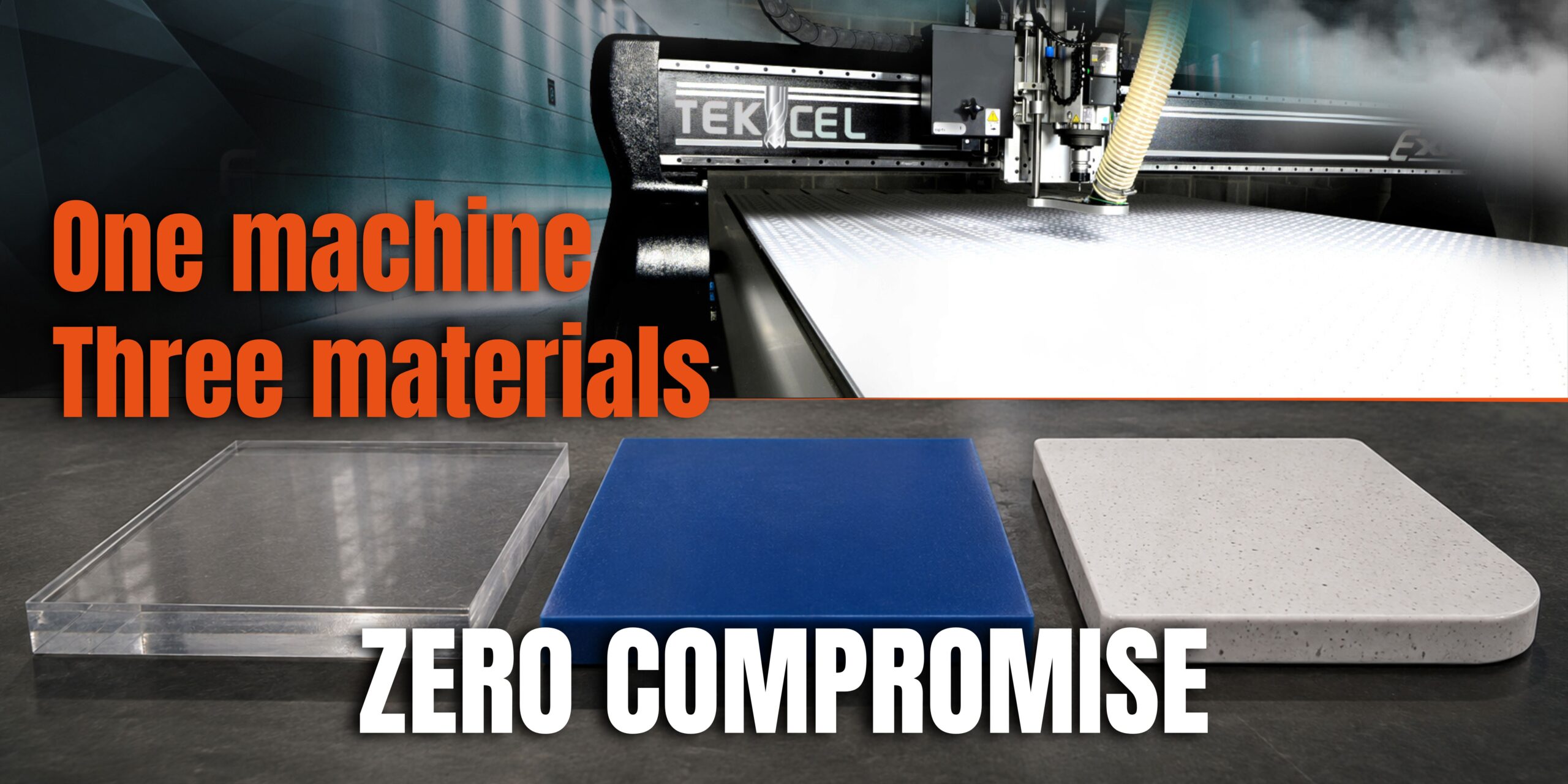
Routing polycarbonate, HDPE and solid surface: why material versatility starts with the machine
Jul / 2026
How CNC cutting is reshaping retail interiors and displays

Jul / 2026
Why short-run structural packaging is becoming a CNC opportunity
Jun / 2026
The case for an ATC router in a metal fabrication shop
Jun / 2026
What makes the Tekcel EXR CNC Router different?
May / 2026
5 signs your CNC setup is making training harder
May / 2026
Where Remakes Really Come From in CNC Supported Joinery