CUSTOMER LOGIN

5 signs your CNC setup is making training harder
5 signs your CNC setup is making training harder
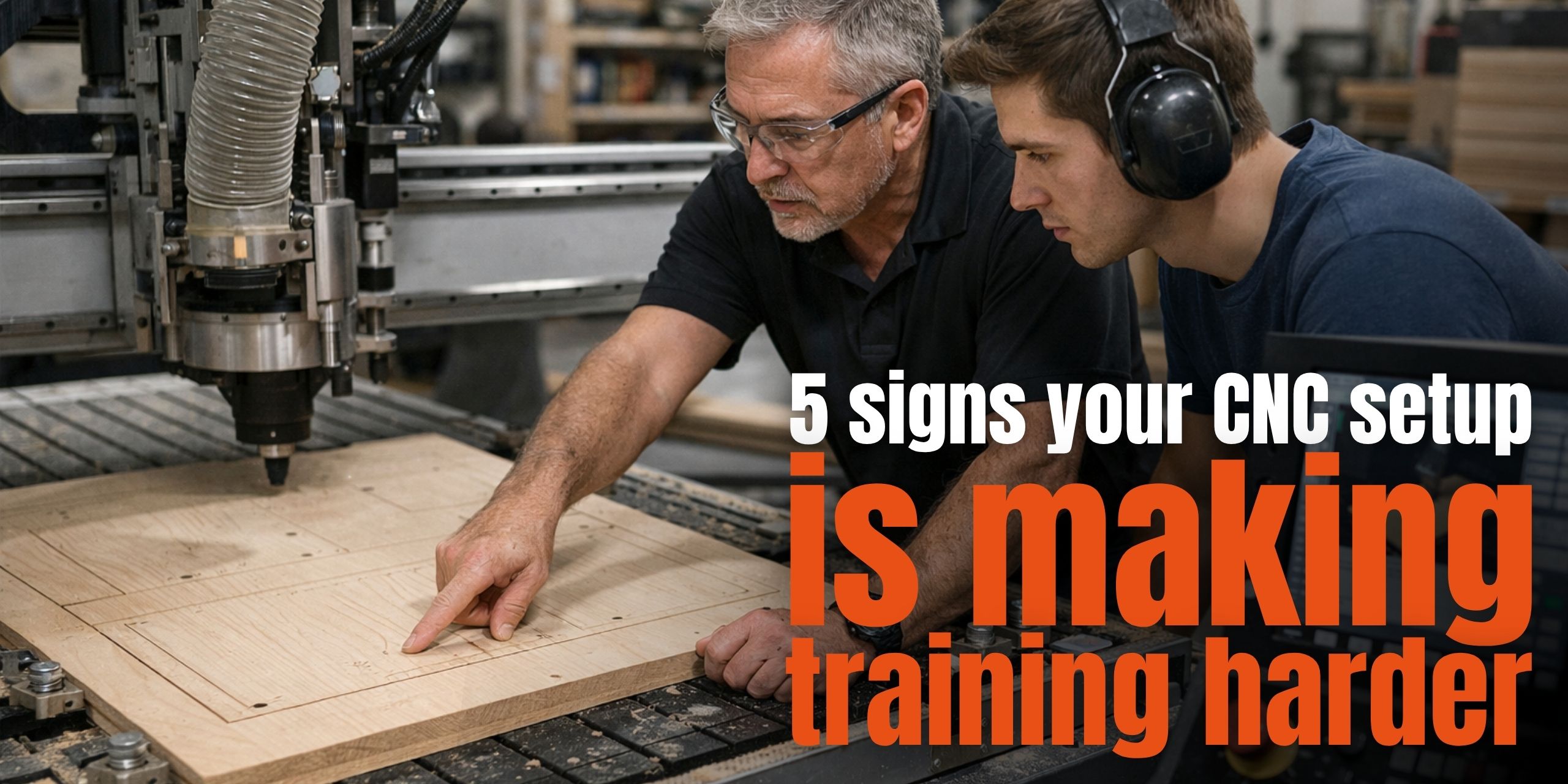
Training on a CNC router should build capability.
It should help new operators become productive, give experienced staff a stable process to work within and make it easier for the workshop to protect output as the team grows or changes.
When that does not happen, many businesses assume the problem sits mainly with the operator.
Sometimes it does.
But sometimes the more important issue is the setup itself.
Older, awkward or inconsistent CNC systems can make training harder than it needs to be by forcing people to learn workarounds, second-guess instability, and rely too heavily on experience just to get routine work done cleanly.
If that sounds familiar, these are five signs worth paying attention to.
1. New starters take too long to become confident on routine work
When a job has to be remade, the cost is not limited to the replacement part.
There is extra machining time, extra material, pressure on schedules, possible disruption to fitting dates and time lost by people further downstream. The later the issue is found, the more expensive it becomes.
This is what makes CNC-supported joinery so sensitive to small process failures. A part can be only slightly wrong and still create a much larger problem once it reaches edging, assembly or site installation.
That is why it is worth tracing remakes back to their point of origin rather than only reacting to where they surface.
2. Experienced staff keep stepping in to stabilise the output
One of the clearest warning signs is when experienced operators or supervisors remain heavily involved in routine production support.
They are the people double-checking jobs before the cycle starts, spotting when a setup does not feel right, correcting recurring issues or stepping in when a learner is not yet sure whether to trust the machine.
That experience is valuable, but if the business depends on it constantly, training is carrying a hidden burden.
The system is not giving less experienced people enough stability to become reliable without regular intervention. As a result, experienced staff get pulled back into support mode instead of spending time where their knowledge adds more value.
3. Basic jobs still come with too many caveats
If training on a routine job includes a long list of warnings, exceptions, and machine-specific caveats, that usually points to a process problem rather than a people problem.
There is a difference between teaching real production judgement and teaching someone how to navigate around instability.
When the machine setup is outdated or awkward, training often becomes full of phrases like:
- keep an eye on this one
- check that again before you run it
- this tool station sometimes needs extra care
- watch that corner because it can shift
These details may sound minor, but together they create a system that is harder to learn and harder to trust.
The more caveats a basic job carries, the less straightforward the training becomes.
4. Different operators get noticeably different results
Variation between operators is not always a skills issue.
Sometimes it is a sign that the setup is leaving too much room for the individual to compensate differently.
One person gets cleaner results because they know where to slow down, what to recheck or how to adjust around weak points in the process. Another follows the same nominal steps but gets a less consistent outcome because the system itself is not doing enough to stabilise the job.
That makes training harder because the learner is being compared not only against a standard process, but against someone else’s accumulated workarounds. The machine may appear capable, but the route to consistent output is still too dependent on personal adaptation.
5. Training feels like passing on survival tactics
The strongest training should develop understanding, discipline, and confidence.
If it feels more like handing over a list of things to watch out for, the workshop may be training people around the machine instead of on it.
That usually happens when the setup still contains too much avoidable friction. The operator is expected to carry the stability of the output through caution, memory, and repetition of inherited habits.
That is not a good long-term position for the business.
It slows down training, increases dependency on a few experienced people and makes the production process more fragile whenever the team changes.
What a better setup should make easier
An improved CNC platform should not remove the need for skill, but it should remove a lot of unnecessary strain around applying it.
That means:
- more stable day-to-day machine behaviour
- clearer setup routines
- less dependence on operator correction
- faster confidence on routine work
- more consistent output across different operators
These things matter because they make training more productive. The effort goes into building real capability instead of preserving informal workarounds.
The training issue may actually be a setup issue
When training takes too long, the instinct is often to focus on the learner.
Sometimes the better question is whether the current CNC setup is giving the workshop the level of predictability, usability and control that modern production now demands.
If new starters take too long to settle, if experienced people still have to carry routine stability, or if simple work remains harder to hand over than it should be, it may be time to review the machine as well as the training process.
If your current CNC setup is making training heavier than it should be, speak to our team about what a more capable platform could change.
Further Blog Posts
Sep / 2026
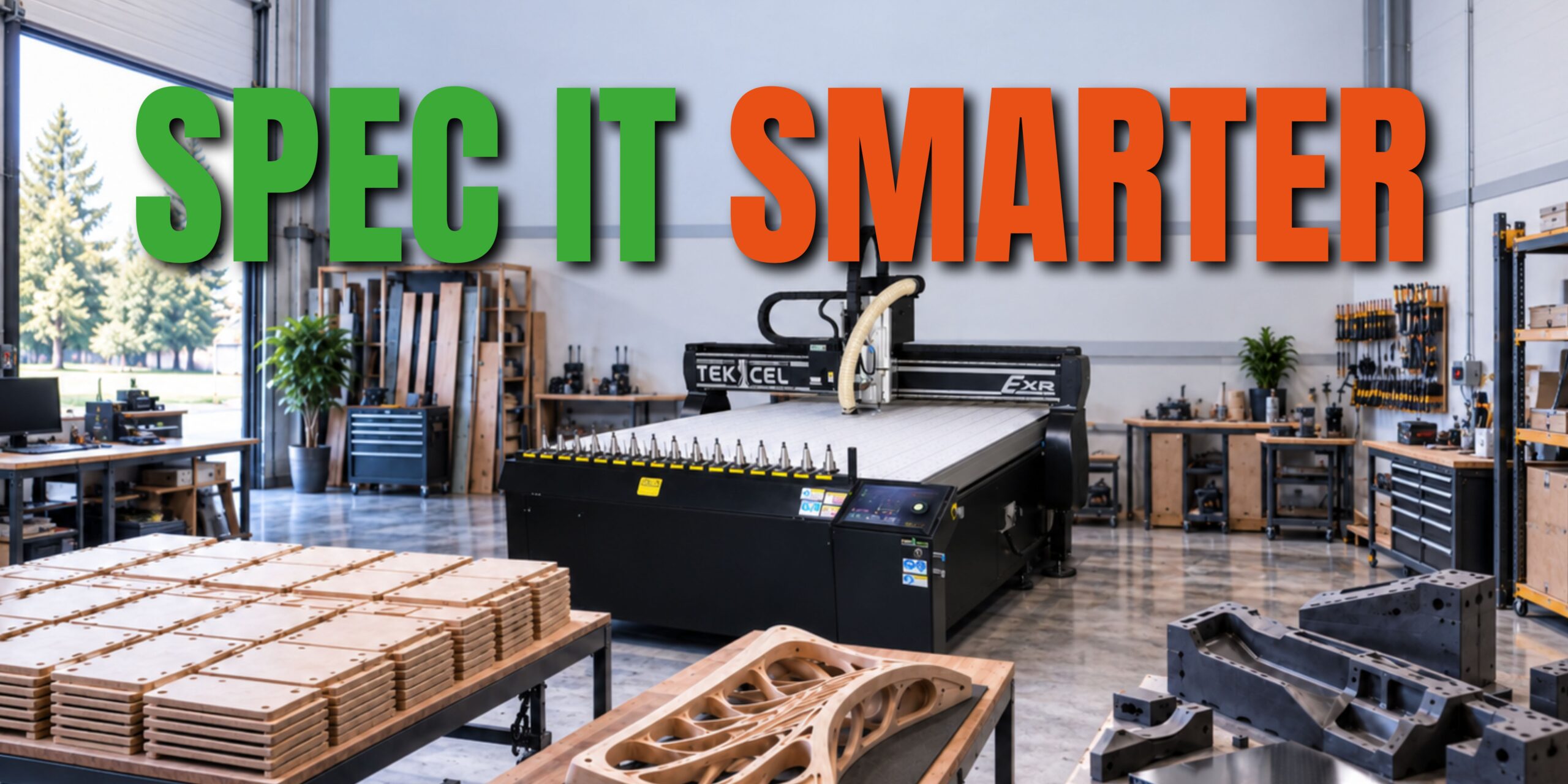
Choosing your next CNC router: which work should drive the decision?
Aug / 2026
BS 559-2: Three practical questions for signmakers

Aug / 2026
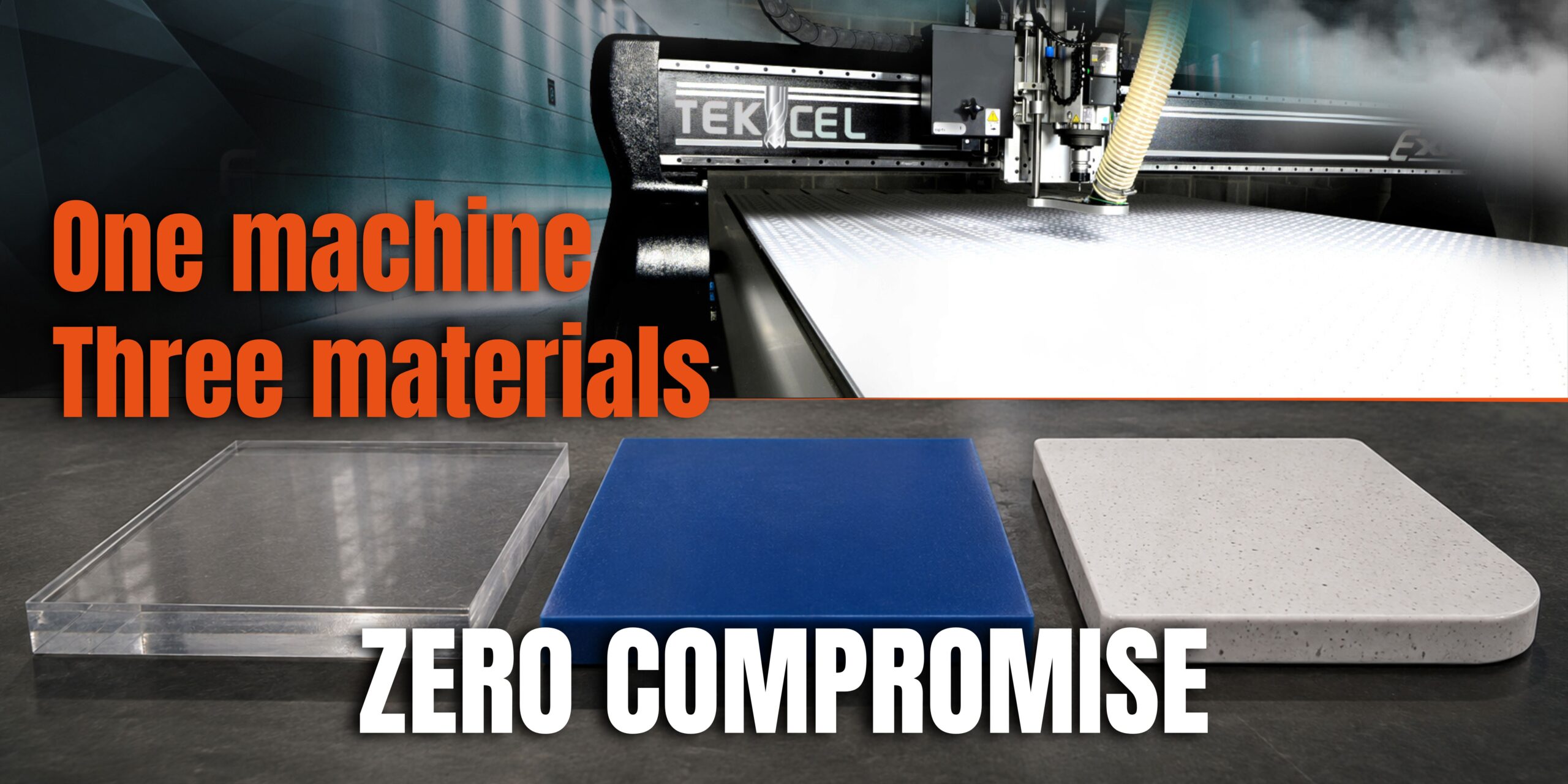
Routing polycarbonate, HDPE and solid surface: why material versatility starts with the machine
Jul / 2026
How CNC cutting is reshaping retail interiors and displays

Jul / 2026
Why short-run structural packaging is becoming a CNC opportunity

Jun / 2026
The case for an ATC router in a metal fabrication shop
Jun / 2026
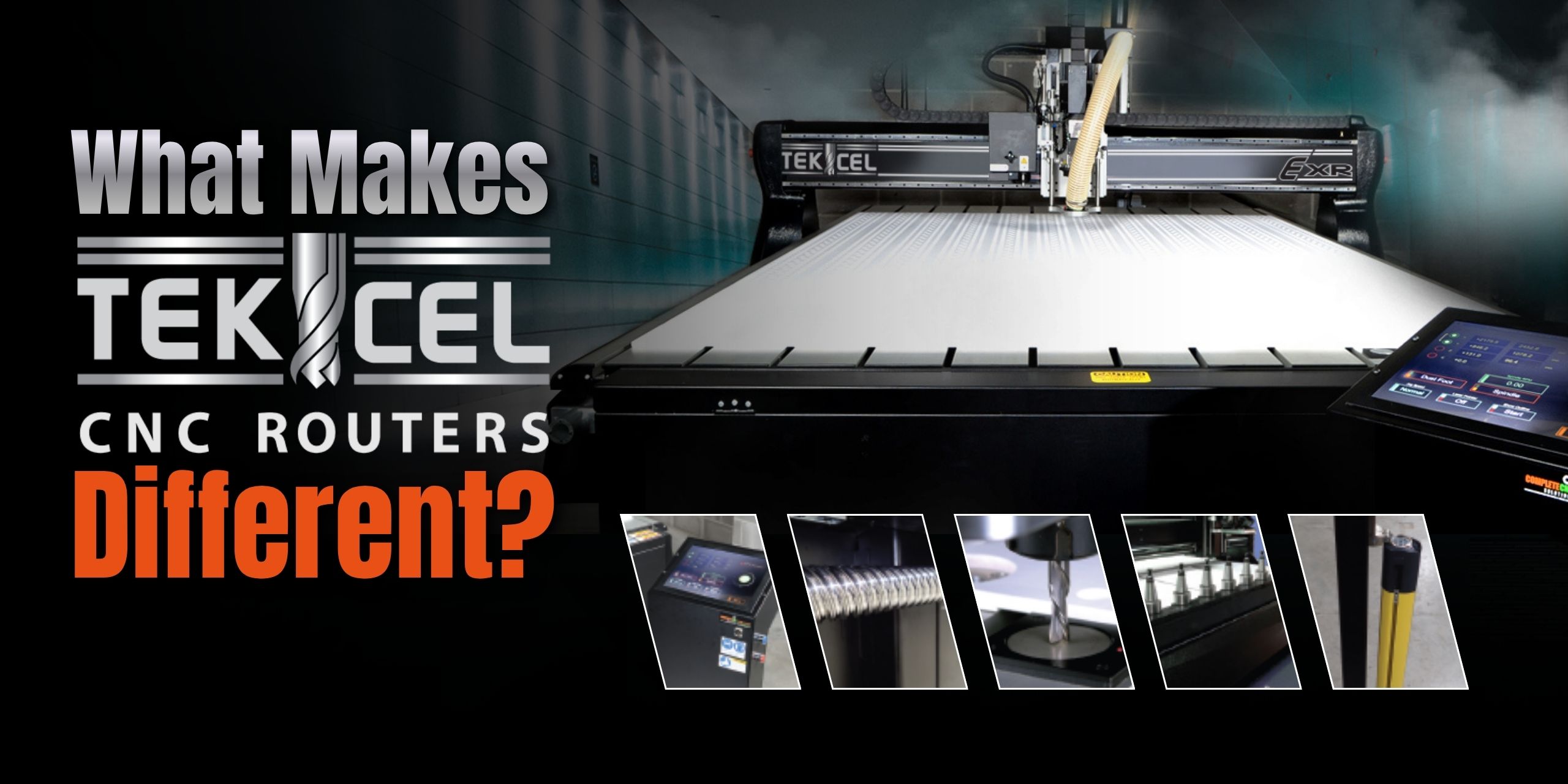
What makes the Tekcel EXR CNC Router different?
May / 2026
5 signs your CNC setup is making training harder